

Today, Toronto’s streets boast smooth asphalt, well-maintained sidewalks, and clear markings. But it wasn’t always like this. The city has come a long way from dusty, unpaved paths to its current state-of-the-art transportation infrastructure. The story of Toronto’s roads isn’t just about construction; it’s a tale of urban evolution, growth, change, and technological advancement. Dive deeper with itoronto.
Empire Paving, a Toronto-based company with years of experience in road surfacing, understands that asphalt quality goes beyond just materials. It’s about grasping the urban landscape, its rhythm, seasonal demands, and long-term needs. So, let’s take a trip back in time to where it all began, and discover how Toronto transformed from a muddy, once-cobbled settlement into a modern city with one of Canada’s most reliable road systems.
The Rise of Cobblestones
In Toronto’s early decades, its streets were largely dirt or gravel – simple, yet highly susceptible to weather conditions. Especially in spring and autumn, roads would turn into muddy quagmires, and after heavy rains, veritable rivers. This eventually led to a pressing need for a more durable and reliable surface.
That’s why, by the 19th century, Toronto’s streets were being covered with stone cobblestones. This sturdy and dependable paving helped keep roads in acceptable condition even during downpours and snowstorms. Granite or other hard rock blocks were laid by hand – a meticulous and labor-intensive process. This cobblestone paving prevented roads from turning into mud pits, a common issue with dirt tracks. Such roads lasted for decades, withstanding the intense traffic of horses, carts, and pedestrians. The construction process itself demanded particular skill. Trenches were dug first, then a layer of sand or fine gravel was added for drainage, before the stones were carefully laid. Each had to fit snugly against its neighbor to prevent the road from disintegrating under traffic. Block shapes needed to be meticulously chosen, and sand or cement mixtures were often used to fill the gaps between them.
Building these roads was not just an engineering feat, but also a social project. Local laborers, often immigrants, were hired for cobblestone construction. They worked in challenging conditions and possessed specialized skills. It was tough, exhausting work, but it provided stable income and an opportunity to learn a trade.
Toronto’s Asphalt Revolution: Enter Empire Paving
The early 20th century brought a true transportation shift to Toronto. Streets that once saw horse-drawn carriages began to accommodate automobiles. This new mode of transport introduced entirely different demands. Old stone or dirt roads simply couldn’t handle the stress caused by cars. That’s when the city started transitioning to asphalt. It was a game-changing decision that made roads safer and far more resilient.
The first asphalt surfaces appeared in Toronto as early as the 1900s. And they’ve stood the test of time, enduring harsh winters, heavy traffic, and decades of use.
Beyond that, Toronto is home to Empire Paving, a company that has specialized in asphalt paving for over 45 years. They handle a wide range of projects – from laying new roads, parking lots, and driveways to repairing and maintaining existing surfaces. Over the years, they’ve accumulated extensive experience, and their use of modern technology allows them to create asphalt that’s even more durable and resistant to Canada’s severe weather conditions. Their work spans both commercial and residential properties, meaning they serve large businesses and private homeowners alike. If you need new paving or repairs, their specialists can provide consultation and design a project tailored to your specific needs.
Toronto’s Ongoing Progress
Each year, Toronto continued to transform: new neighborhoods were built, suburbs emerged, and traffic steadily increased. For the city to handle this growth, its infrastructure had to keep pace. The mid-20th century saw major advancements in asphalt technology. Mechanized asphalt pavers made their debut, allowing roads to be laid faster, more accurately, and more uniformly. New asphalt formulas also meant surfaces could better withstand heavy loads and temperature fluctuations.
During the 1960s and 70s, asphalt roads became an integral part of suburban development in areas like Scarborough, North York, and Etobicoke. Large-scale housing projects demanded reliable road connections, solidifying asphalt’s role in Toronto as a matter of calculated efficiency and long-term planning.
Why Toronto Still Prefers Asphalt Paving
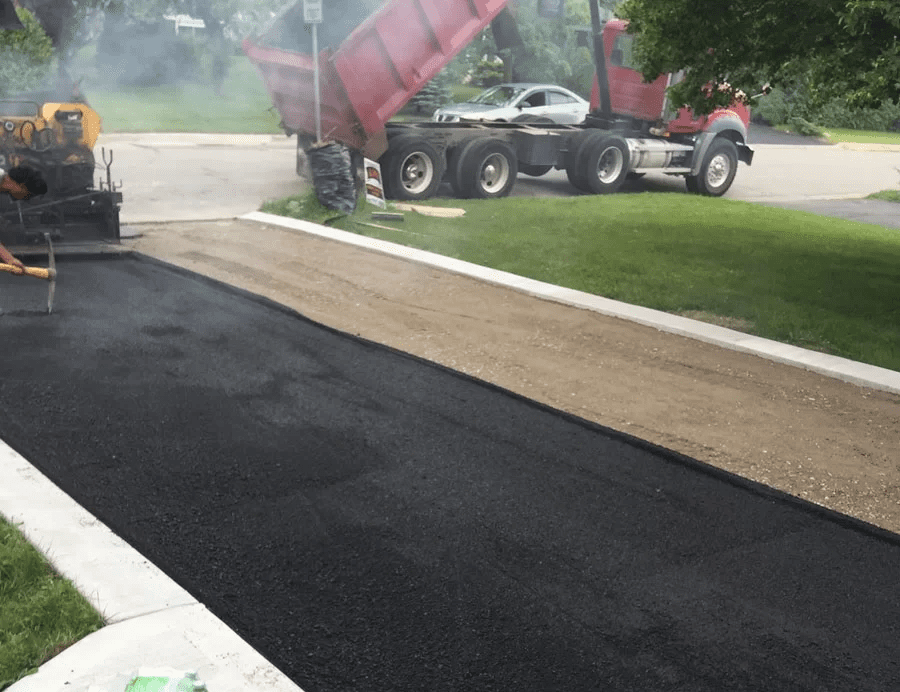
It’s hard to imagine modern Toronto without its smooth, black roads. Just a century ago, the city was covered in cobblestones and gravel, but the real technological breakthrough came with the advent of asphalt. Today, it remains the unwavering standard for urban infrastructure. As mentioned, asphalt withstands intense traffic, performs exceptionally well in harsh climates, and maintains its properties for decades. Its flexibility allows the material to “work” with temperature fluctuations, which is particularly crucial for Canada’s severe weather. Plus, it’s one of the most cost-effective paving options, both in terms of initial expense and maintenance. And another significant advantage: asphalt can be laid quickly, minimizing disruption for residents of this dynamic metropolis.