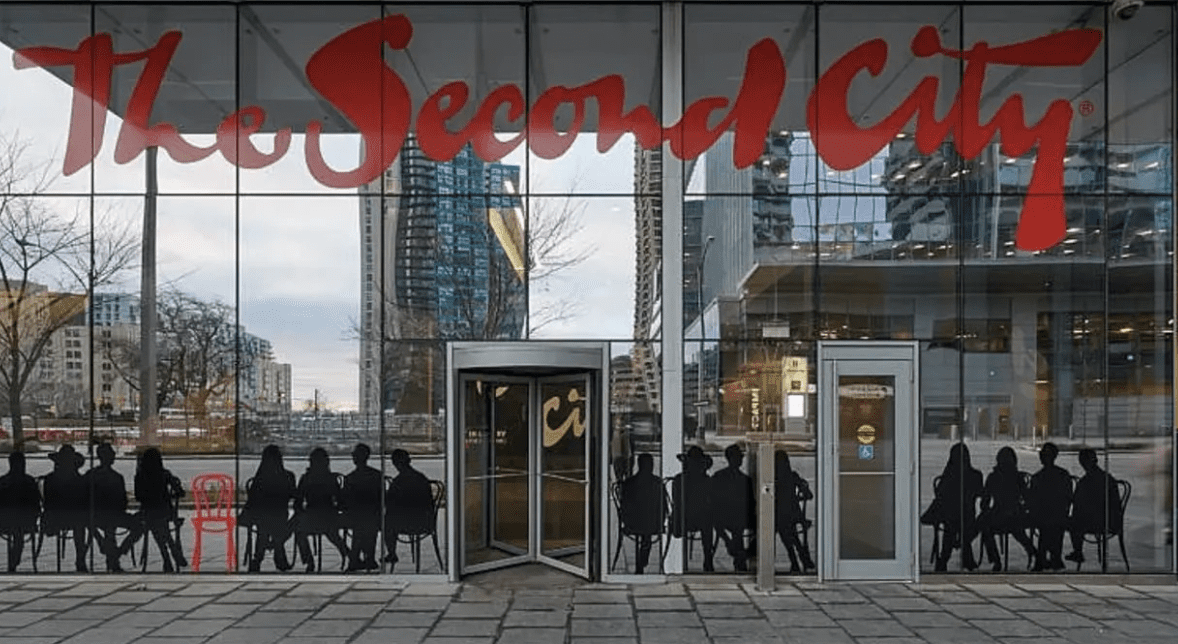

When we think of theatre, we often picture lavish sets, velvet curtains, and serious monologues. But there’s a theatre in Toronto where the main tool isn’t a script, but quick thinking. Here, the ultimate reward isn’t a hushed auditorium, but explosive laughter. Enter The Second City Toronto. It’s a legendary talent incubator that helped turn the city into “Hollywood North” for comedians. This is where stars are born and improv becomes high art. Every night, audiences witness unique, lightning-in-a-bottle moments that will never be repeated exactly the same way again, as read on itoronto.
How It All Began
The story of The Second City Toronto didn’t start with professional scripts; it began with children’s games. The foundation of the theatre was built on the groundbreaking improv techniques of Viola Spolin. Her son, Paul Sills, along with Bernie Sahlins and Howard Alk, decided to turn these exercises into a theatrical art form. On a snowy December night in 1959, the first Second City cabaret opened its doors in Chicago. It was revolutionary. Instead of memorized lines, the actors relied on live interaction and biting satire.
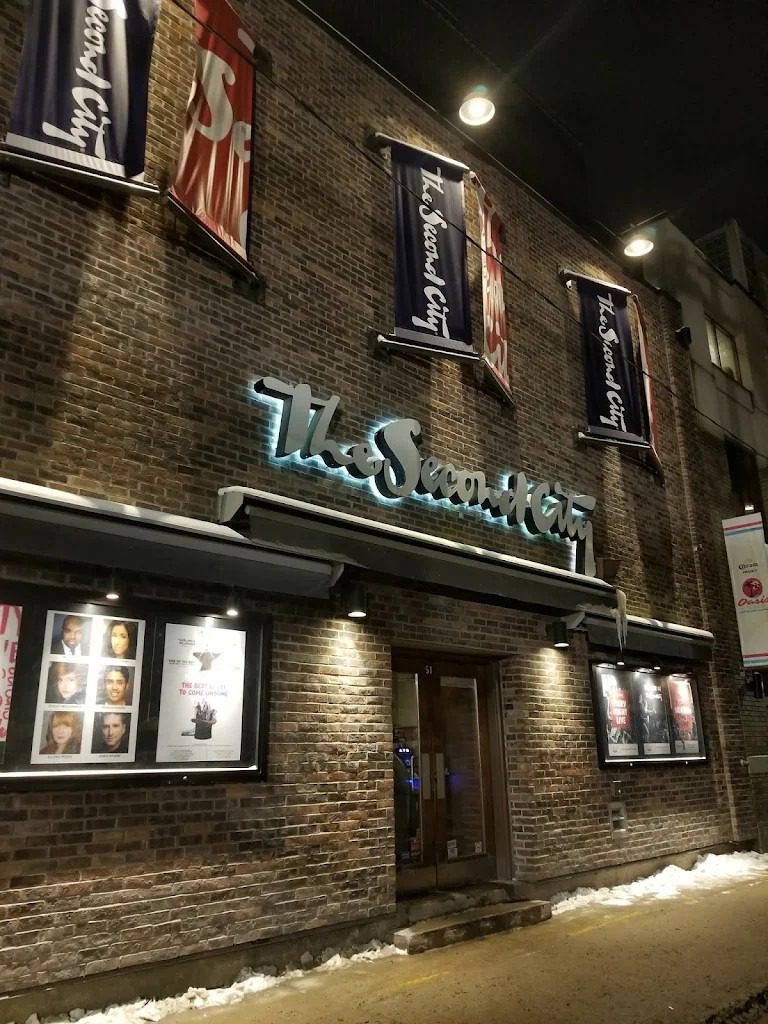
The Toronto branch of the theatre opened in 1974, thanks to producer Andrew Alexander. Armed with just a $7,000 loan, he set out to transplant Sills’s methods into the already fertile soil of the Canadian comedy scene. The success was instant. Toronto didn’t just copy the Chicago model; it carved out its own unique identity. This distinct voice eventually gave the world the legendary sketch show SCTV (Second City Television). It was here that “hoser comedy” was born—a distinctly Canadian brand of humour epitomized by Bob and Doug McKenzie, played by Rick Moranis and Dave Thomas. This iconic style paved the way for modern hits like Letterkenny and Trailer Park Boys.
A Gallery of Legends: Second City Toronto Alumni
To truly grasp the impact of The Second City Toronto, you just need to look at the names that have shaped the global film industry. Here are just a few comedy titans who launched their careers on this very stage:
- John Candy. The gentle giant of global comedy. Long before starring in classics like Home Alone, Planes, Trains and Automobiles, and Uncle Buck, Candy was one of the brightest stars in the Toronto troupe. His unique ability to blend absurd humour with incredible warmth made him a beloved figure to millions.
- Catherine O’Hara. Today, a new generation knows her as the eccentric Moira Rose from Schitt’s Creek, while older fans remember her as Kevin’s mom in Home Alone. O’Hara is a master of transformation who honed her comedic chops in Toronto back in the 1970s.
- Eugene Levy. The unforgettable dad from American Pie and Catherine O’Hara’s long-time creative partner. His signature style—the understated yet hilariously awkward “everyman”—was born during those improv sessions on Mercer Street.
- Mike Myers. The mastermind behind the cult hits Austin Powers and Wayne’s World, and the legendary voice of Shrek. Myers joined the theatre at a very young age, developing many of the characters here that would later become pop culture icons.
- Martin Short. The hyper-energetic comedian and star of Three Amigos, Father of the Bride, and the modern hit Only Murders in the Building. His incredible talent for parody and physical comedy truly blossomed while he was part of The Second City ensemble.
- Dave Thomas and Rick Moranis. The legendary McKenzie brothers. While Moranis later became a blockbuster star with hits like Ghostbusters and Honey, I Shrunk the Kids, his roots will always lie in the pure Canadian humour nurtured within these theatre walls.
What’s fascinating is that many of these actors weren’t just colleagues; they were close friends. This forged a special on-stage chemistry that they later brought to television with SCTV—Canada’s answer to Saturday Night Live.
Today, the theatre’s hallways are lined with photos of former Mainstage cast members. These group shots look a bit like high school yearbooks. You see young, ambitious artists—who would eventually become millionaires and Oscar winners—just learning the ropes of their trade. For every new generation of comedians, these portraits serve as both an inspiration and a reminder of the incredibly high bar set before them.
Behind the Scenes: How the Magic Happens
Many people mistakenly believe that improv is just a bunch of chaotic jokes thrown around on stage. In reality, behind every show is a grueling, rigorous routine known simply at the theatre as “The Process.”
Making it to the Mainstage cast is a career pinnacle that can’t be bought or faked. Actors are filtered through the Training Centre and the Conservatory before paying their dues in three supporting ensembles:
- The Education Company (performing in schools).
- The House Company (performing on the John Candy Box Theatre stage).
- The Touring Company (touring across the country).
When an actor is finally chosen for the Mainstage, a 12-week process of creating a new show kicks off. A typical workday goes like this: from 1:00 PM to 6:00 PM, the cast writes and rehearses. Then, at 9:45 PM, right after the current evening show wraps up, they hit the stage for an improv set. It’s during these late-night, unscripted sessions in front of a live audience that the best sketches for the upcoming show are born. Whatever gets a big laugh makes it into the script; whatever falls flat is tossed out.
Location and Vibe
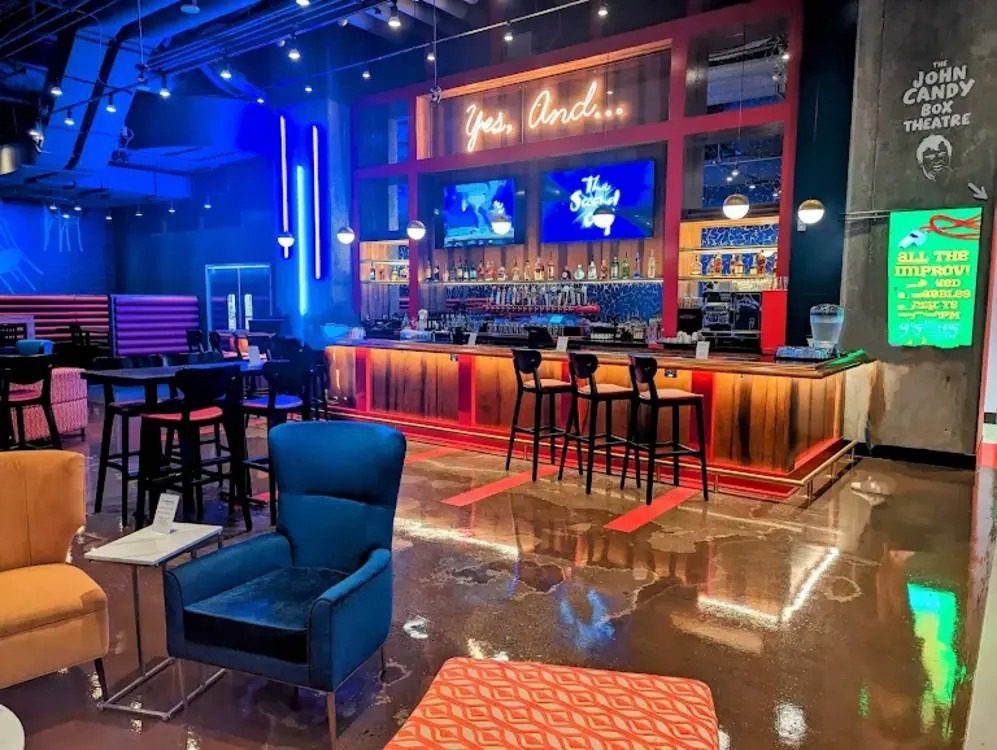
After many iconic years on Mercer Street, The Second City Toronto has relocated to a brand-new, state-of-the-art facility at One York Street (110 Harbour St).
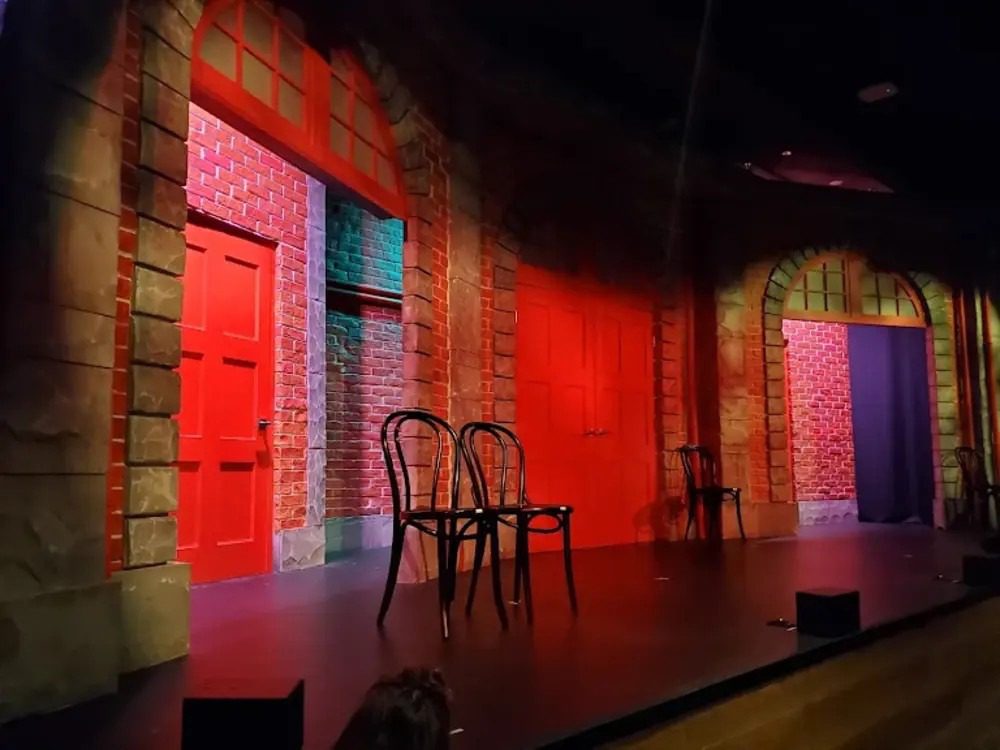
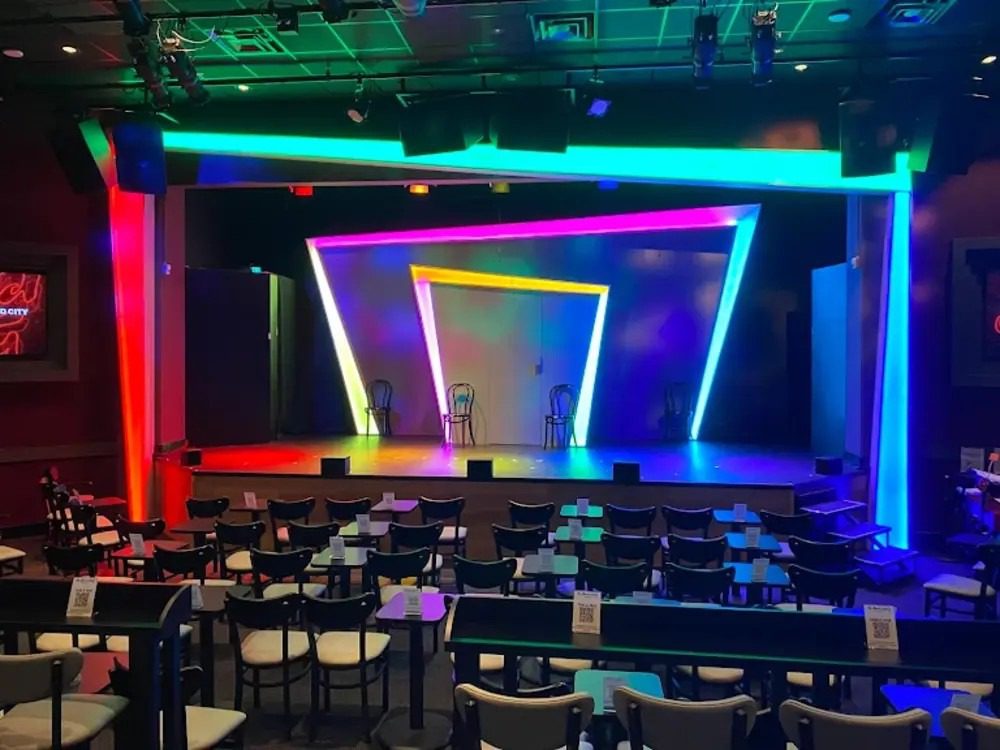
The new venue features classic cabaret-style seating and accommodates about 300 guests. This creates an intimate, cozy atmosphere with absolutely no barrier between the performers and the crowd. Backstage, however, the old-school spirit lives on. The actors’ lockers are covered in thousands of signatures and doodles from comedy legends who have graced the stage before them.
For theatregoers, it’s not just about watching a show—it’s a full night out. You can order dinner and drinks right to your table during the performance or take advantage of special packages with some of the neighbourhood’s best restaurants. It makes The Second City the perfect spot for date nights, celebrations, or corporate outings.
Education and Social Impact
The Second City is about more than just getting laughs; it’s also about personal growth. The theatre’s Training Centre offers classes for absolutely everyone, from kids to seniors. Beyond classic improv and acting courses, they run unique programs like “Improv for Anxiety.” These classes help individuals dealing with social anxiety build self-confidence through playful techniques in a safe, incredibly supportive environment.
On the business side, the theatre hosts corporate workshops. By using improv techniques, teams learn how to communicate better, build trust, and find creative solutions when faced with uncertainty. The core improv principle of “Yes, and…” transforms into a powerful tool for shaping strong, collaborative corporate cultures.
“The One” in Improv Class
It’s a little-known fact that The Matrix star Keanu Reeves is also an alumnus of The Second City Training Centre. As a teenager, he took improv classes here to overcome his shyness. Reeves later recalled that these sessions taught him to trust his instincts and react quickly to his scene partners. Funnily enough, Keanu ended up here after being kicked out of an arts school for being “too boisterous”—at The Second City, that boundless energy was finally channelled in the right direction.
Why You Should Visit The Second City
Unlike traditional stand-up spots like Yuk Yuk’s or Comedy Bar, where the show rests entirely on one person with a mic, The Second City offers ensemble comedy. It’s a complex, brilliantly orchestrated choreography of interaction, music, lighting, and dialogue. The performances are always highly topical, often reacting to the news that broke just that very morning.
Tips for Your Visit
- Catch an Improv Set. After the mainstage show, the cast often runs a free or heavily discounted improv set to test out fresh ideas. It’s comedy at its most raw and dynamic.
- Don’t fear the front row. You might get pulled into a bit of banter or asked for a suggestion to spark a sketch. It’s all part of the magic!
- Sign up for a drop-in class. Even if you’ve never set foot on a stage, a one-hour improv workshop will completely change how you look at communication.
The Second City Toronto is much more than a theatre. It’s a powerhouse fueling the global comedy industry. It’s the place where ordinary Canadian kids transformed into silver-screen icons.

In a city often dominated by finance and tech, The Second City reminds us of the sheer power of imagination and the importance of a really good laugh. It’s a space where something entirely unique is created every single night—something you’ll never see exactly the same way again. If you want to understand why Canadians are widely considered the funniest people on earth, just buy a ticket to this theatre. The laughs are guaranteed, and spotting a future Hollywood star is just the cherry on top.
Fun fact: many sketches we now consider comedy movie classics originally started as fumbled improv scenes on a Toronto stage. The actors honed and polished them to perfection based entirely on audience reactions. It truly is a theatre built right alongside its audience.