
Toronto has always been a hub for athletic talent, producing persistent and dedicated champions throughout its history. This article highlights some of the city’s most famous and talented sports stars. More on itoronto.
Dale Hawerchuk
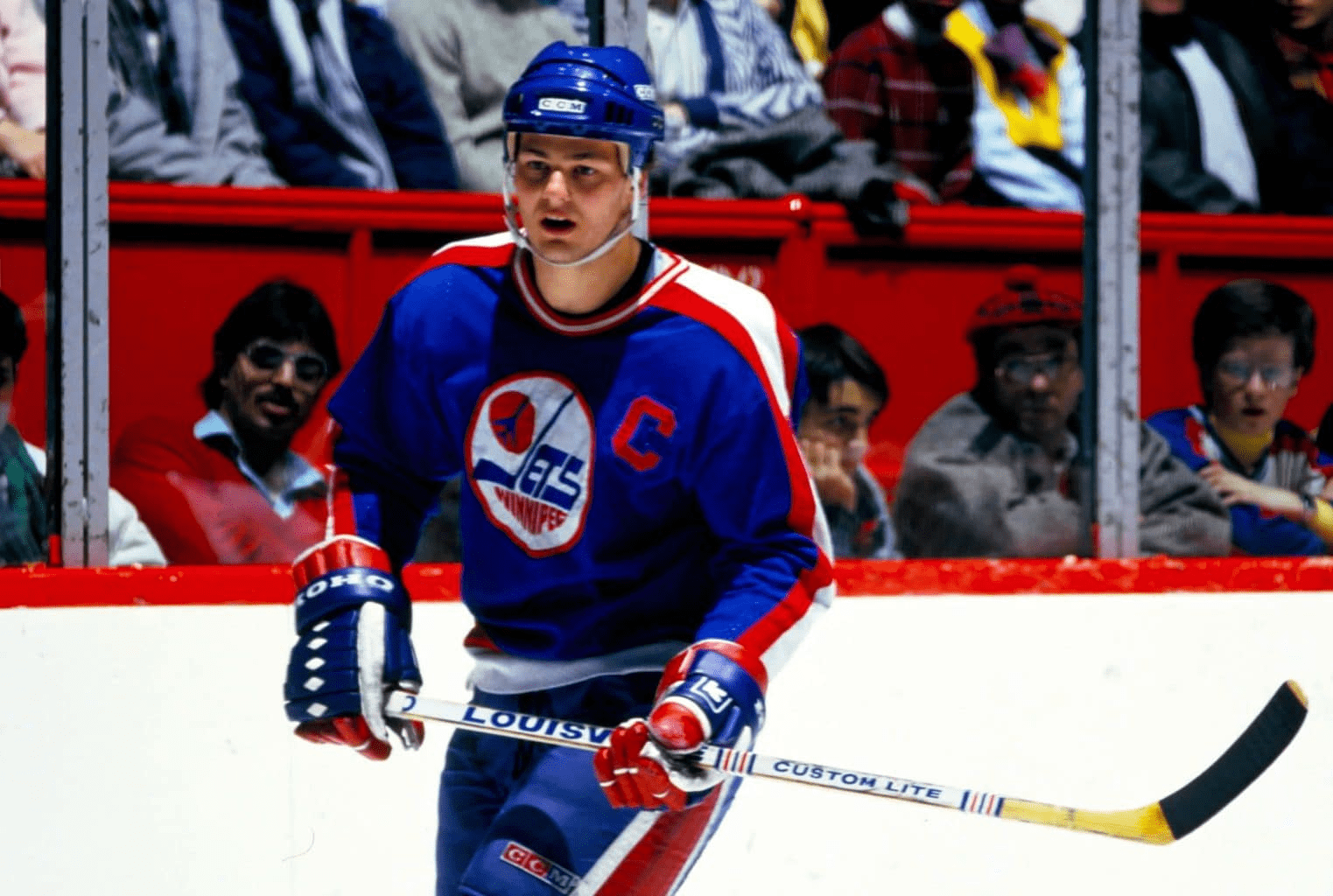
Dale Martin Hawerchuk, a renowned hockey player and coach, was born on April 4, 1963, in Toronto. Hawerchuk was the face of the Winnipeg Jets franchise during the 1980s. After winning back-to-back Memorial Cups, the highly skilled center was selected first overall in the 1981 NHL Draft. In 1982, he won the Calder Memorial Trophy as the NHL’s Rookie of the Year, setting a record with 100 points and becoming the youngest player in NHL history to do so. Although often overshadowed by Wayne Gretzky and Mario Lemieux, Hawerchuk played 16 NHL seasons, was a five-time All-Star, and ranked 20th and 21st all-time in NHL points and assists, respectively. He was inducted into the Hockey Hall of Fame, the Manitoba Hockey Hall of Fame, and the Manitoba Sports Hall of Fame.
Due to the Jets’ frequent early playoff exits, Hawerchuk became a key player for Team Canada in World Championships, earning bronze medals in 1982 and 1986 and a silver in 1989. He was also part of Team Canada’s victories in the 1987 and 1991 Canada Cups. In the decisive final game of the 1987 tournament against the Soviet Union, Hawerchuk won a crucial faceoff in the Canadian zone, initiating a play where Gretzky assisted Lemieux in scoring the game-winning goal with 1:26 left in regulation. This goal remains one of the most iconic moments in hockey history.
Roy Conacher
A member of a legendary sports family, Roy Conacher was the most naturally gifted hockey player among his brothers, who also played in the NHL. Roy led his teams in scoring at least one season for each of the three NHL clubs he played for. However, his brothers, Charlie and Lionel, are better known, with both inducted into the Hockey Hall of Fame. Lionel was named Canada’s best athlete of the first half of the 20th century, and Charlie was a key member of the famed “Kid Line” for the Toronto Maple Leafs in the 1930s.
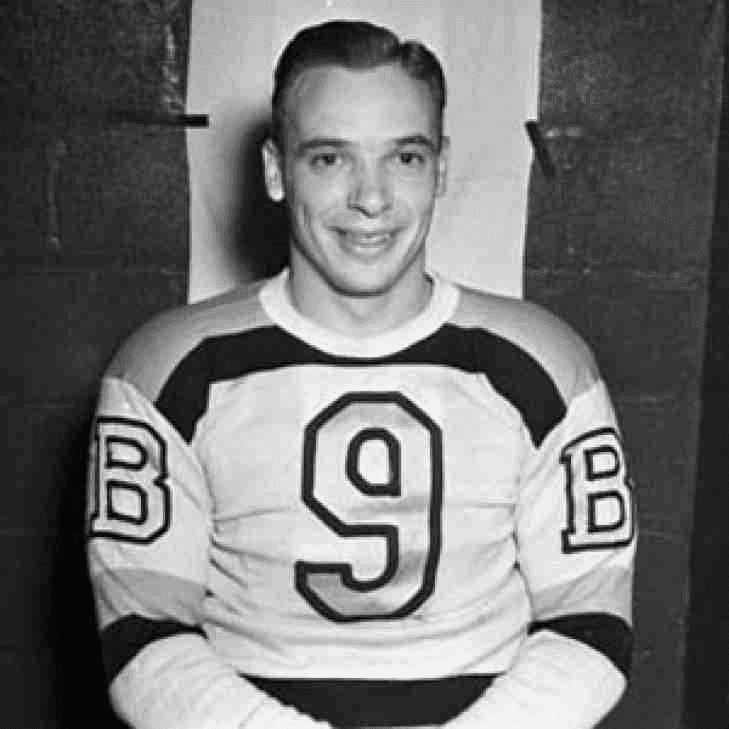
Roy Conacher was born in Toronto on October 5, 1916. He began his hockey journey playing public school hockey at Jesse Ketchum School. Later, he joined the city’s Marlboro Bantams and Marlboro Midgets. Conacher also played for the West Toronto Nationals, a team that won the 1936 Memorial Cup. Interestingly, his twin brother Bert was also a member of the same team.
Conacher made his professional debut in 1938 when he joined the Boston Bruins at the age of 22. That year, he led the NHL in goals scored (26) while playing on a line with future Hall of Fame center Bill Cowley. Roy was one of the top candidates for Rookie of the Year, as the Bruins entered a dominant period, consistently finishing first in the league. The team won two Stanley Cup championships in 1939 and 1941, with Conacher scoring the game-winning goal in the 1939 final.
In 1940, the Bruins fell short of the championship, partly because Conacher missed 16 games due to a broken wrist. World War II interrupted his hockey career, taking away what may have been three of his best playing years. During this time, he served in the Royal Canadian Air Force. Despite this hiatus, Conacher returned to the Bruins for the 1946 playoffs before being traded to the Detroit Red Wings later that summer.
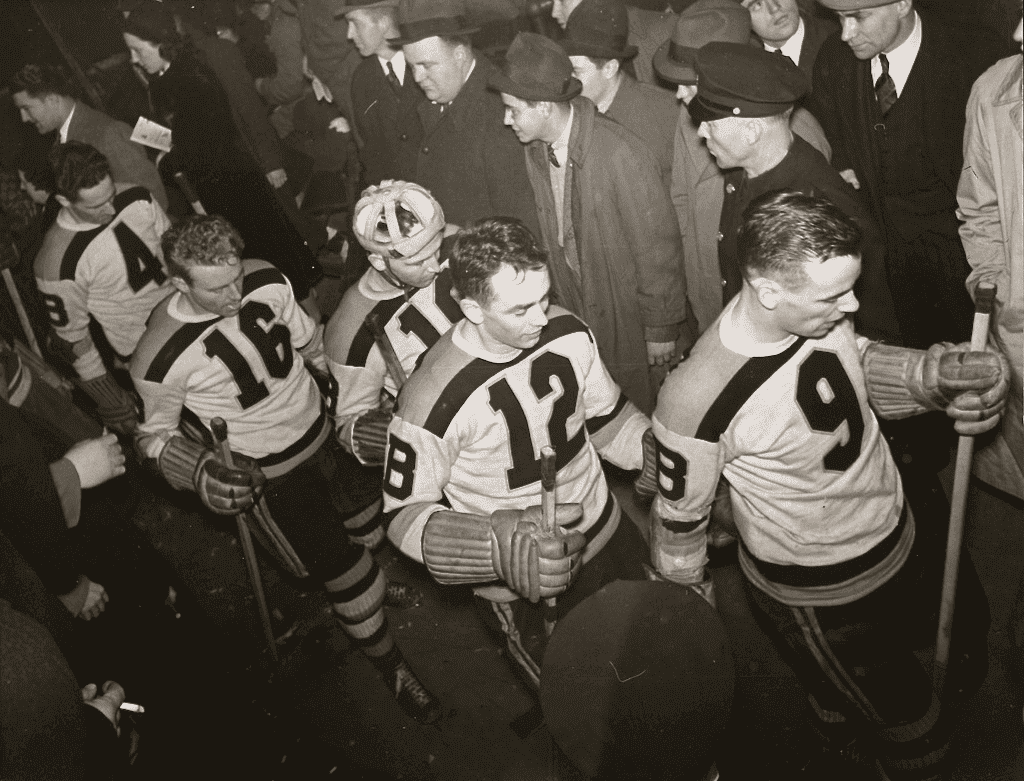
In the following season, Roy Conacher emerged as a key player for the Detroit Red Wings, scoring 30 goals to lead the team. In 1948, he joined the Chicago Blackhawks, where his brother Charlie was a coach. This move proved to be a pivotal decision in his career. During the 1948-1949 season, Roy achieved his best individual performance, leading the league in scoring with 68 points and winning the Art Ross Trophy. At the end of the season, he was named to the NHL First All-Star Team as a left winger.
From 1949 to 1952, Roy played his final four NHL seasons while living on Ellen Street in Midland. During this time, he helped persuade the Chicago Blackhawks to play exhibition games at the Midland Arena Gardens.
Unfortunately, Conacher’s career ended in 1952 due to an injury. By the time of his retirement, he had accumulated an impressive 226 goals and 200 assists. That same year, he remained in Midland to coach the Intermediate A Midland Flyers. Later, he led the Midland Red Wings to the OHA “C” Junior Championship during the 1953-54 season.
Afterward, Roy relocated to British Columbia, where he lived until his death in 1984. Despite his achievements, he remained relatively underrecognized compared to his more famous brothers. Roy’s modesty and quiet demeanor earned him the nickname “The Forgotten Conacher.” His widow, Fran, continues to reside in British Columbia but returns annually to the cottage they once shared with their sons, Jamie and Mark, and their daughter, Candace.
Pernell-Karl Sylvester Subban
Pernell-Karl Sylvester Subban, a name synonymous with hockey excellence, was born on May 13, 1989, in Toronto. A standout defenseman, Subban led the Belleville Bulls to the Memorial Cup in 2008 and earned the American Hockey League’s President’s Award in 2010. He went on to appear in three NHL All-Star Games with the Montreal Canadiens and won the Norris Trophy in 2013 as the league’s best defenseman. From 2016 to 2019, he played for the Nashville Predators before being traded to the New Jersey Devils. Subban also achieved international success, winning gold medals with Team Canada at the 2008 and 2009 IIHF World Junior Championships, as well as at the 2014 Winter Olympics.
Beyond his athletic accomplishments, Subban is widely recognized for his philanthropy and generosity. Known for his charitable work as much as for his on-ice performance, he remains a celebrated figure in both the sports and humanitarian worlds.

Subban retired in 2022 after 13 successful NHL seasons. During his career, he secured three gold medals for Canada at major international tournaments: the 2008 IIHF World Junior Championship in Pardubice, Czech Republic; the 2009 IIHF World Junior Championship in Ottawa, Canada; and the 2014 Winter Olympics in Sochi, Russia.
At the 2009 World Juniors, Subban served as an assistant captain for Team Canada. He scored three goals and recorded six assists, amassing nine points and emerging as a key leader in the tournament. His standout performance not only helped Canada clinch the championship but also solidified his reputation as an exceptional talent.
Subban’s leadership at the 2009 World Juniors was particularly significant for his career. Drafted in 2007, his offensive skills were highly praised, though critics often questioned his defensive capabilities. However, his strong showing in Ottawa silenced those doubts, as he showcased his defensive prowess alongside his well-established offensive abilities.
Throughout his career, Subban continually demonstrated his skill, intelligence, and resilience, earning respect both on and off the ice. His legacy as a remarkable athlete and philanthropist ensures his place as one of Canada’s most beloved hockey icons.
Brendan Shanahan
Brendan Shanahan was born and raised in the west Toronto neighbourhood of Mimico.
After two years with the London Knights of the Ontario Hockey League, Shanahan was drafted second overall by the New Jersey Devils in 1987. He went on to play 21 NHL seasons with the Devils, St. Louis Blues, Hartford Whalers, Detroit Red Wings, and New York Rangers.
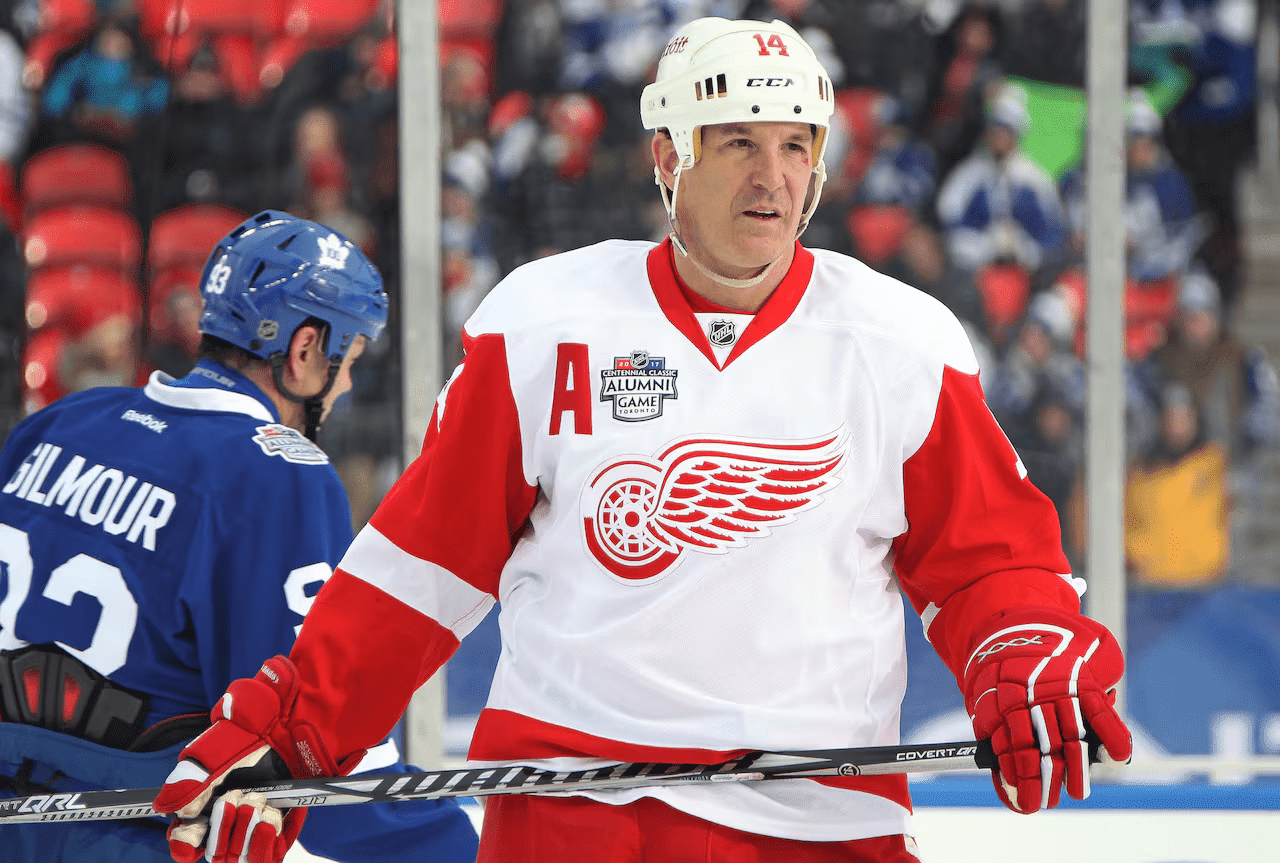
Throughout his illustrious career, Brendan Shanahan achieved remarkable success, winning the Stanley Cup three times, a gold medal at the Winter Olympics, a World Championship gold, and a Canada Cup title with Team Canada. Known for his unique combination of skill and toughness, Shanahan remains the only player in NHL history to have scored over 600 goals (656) while also amassing more than 2000 penalty minutes (2489). His impressive streak of 19 consecutive seasons with 20 or more goals is second only to Gordie Howe. In 2013, Shanahan was rightfully inducted into the Hockey Hall of Fame.
In 2003, Shanahan was honored with the NHL’s King Clancy Memorial Trophy, awarded annually to a player who demonstrates exemplary leadership on and off the ice and makes significant humanitarian contributions to their team and community.
After retiring at the age of 40, Shanahan dedicated the next five years to working in the NHL’s front office in New York. He initially served as Vice President of Hockey and Business Development before becoming the Senior Vice President of Player Safety and Hockey Operations.
At the end of the 2013–14 season, Shanahan embraced a pivotal role as President and Alternate Governor of the Toronto Maple Leafs, where he continues to shape the future of one of hockey’s most storied franchises.