

The Royal Ontario Museum is located in Toronto, Ontario. It is considered one of the largest ethnographic, historical and cultural centres of North America. It is also listed among the seven architectural wonders of the world. The Royal Ontario Museum is widely known to local residents and tourists under the abbreviation ROM. The institution attracts more and more visitors every year. Learn more at itoronto.
The emergence of the Royal Ontario Museum
The Royal Ontario Museum is of national importance. The number of its exhibits is constantly growing, as well as the number of people willing to visit this famous cultural centre.
The Royal Ontario Museum was founded on the basis of a secondary school in 1857. Initially, it served as an exhibition of fine arts and ethnography. Only on April 16, 1912, it was granted the status of a museum and the local authorities subordinated it. On March 19, 1914, the Duke of Connaught and the Governor General of Canada officially opened the Royal Ontario Museum.
The ROM is located at the corner of Bloor Street and Avenue Road, north of Queen’s Park and east of Philosopher’s Walk of the University of Toronto. The museum was managed by the university until 1968. However, the subsequent granting of the status of an independent institution didn’t break close ties with the university. If necessary, the museum representatives can ask the staff of the educational institution for assistance and, in turn, the university can use the museum’s resources for research.
The museum’s exterior and impressive exhibits
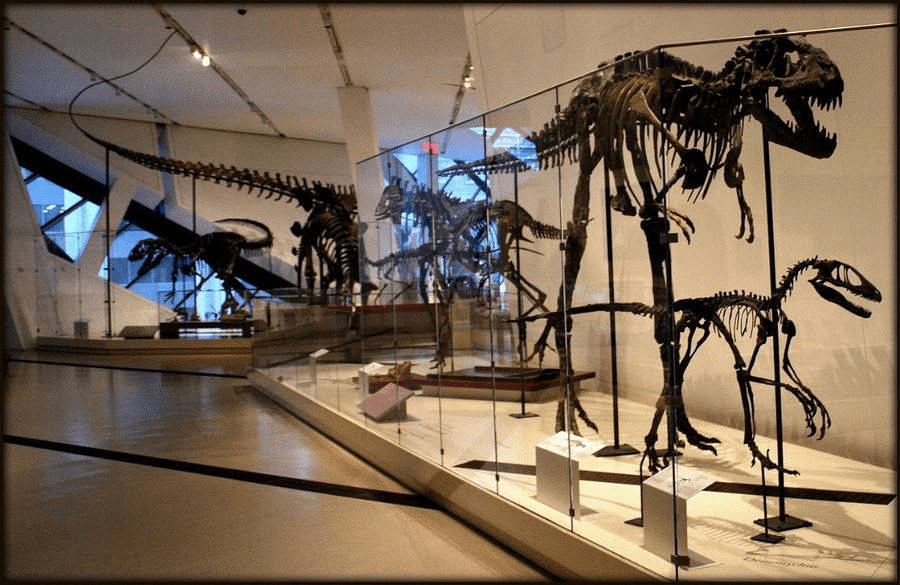
The museum has a huge collection of over six million objects located in 40 galleries. The local exhibitions attract tourists with diverse interests and hobbies. The museum became famous for its collections of dinosaurs, Asian carpets, vases, weapons, paintings by famous European artists, Buddha statues and many others.
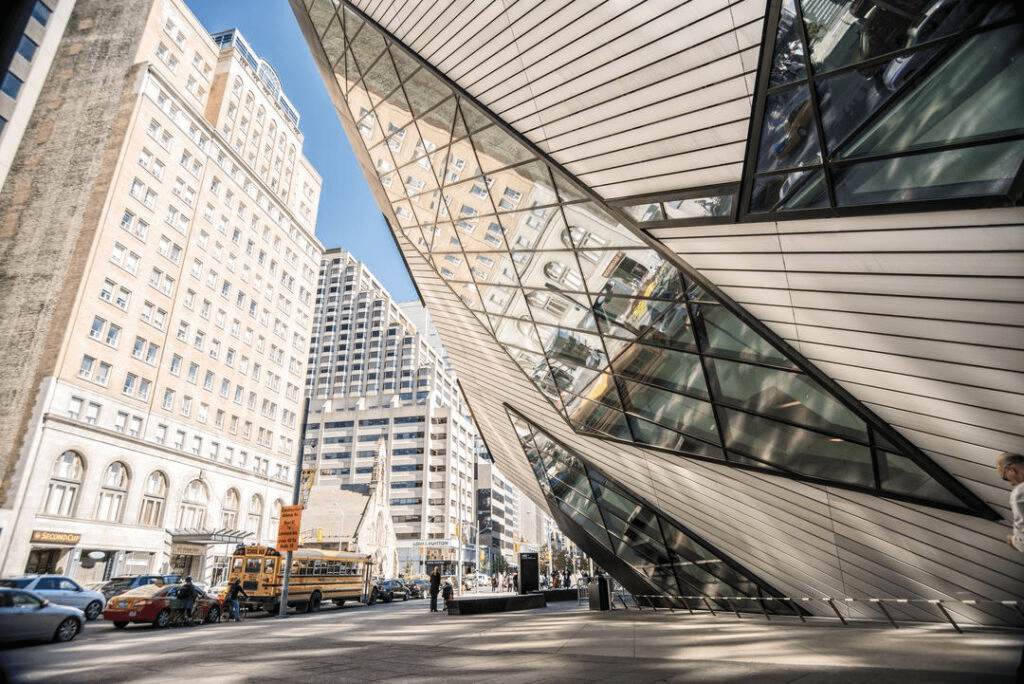
The museum features an extraordinary exterior, which was created by the architect Daniel Libeskind. He managed to turn the museum into an exquisite building made of glass and metal. The architect transformed the old building into a huge jewel-looking structure with aluminium towers. Daniel Libeskind said that he was inspired by real mineral crystals, which are presented in one of the museum galleries. He made his first sketch on an ordinary napkin. It took seven years to develop the project and four years to implement it. His extremely difficult and expensive idea was realised owing to the sponsorship of philanthropist Michael Lee-Chin.
Only a few museums can boast of such a number of historical monuments collected in one place. The Royal Ontario Museum never ceases to amaze. Its management created musical accompaniment for visitors. Thus, they immediately immerse in the atmosphere and interact with the exhibits via various melodies and characteristic sounds.
On the first floor, visitors enter the House of Spirits, where the sounds of nature echo with human voices. Next, visitors climb the Stair of Wonders to the second floor where they can find the dinosaur gallery. This exposition is popular among both children and adults. The third floor introduces visitors to the art of Africa, Asia, North and South America. The Egyptian sarcophagus with the Luxor mummy, a bust of Cleopatra VII Philopator and a statue of the goddess Sekhmet are the most popular here. The fourth level of the museum was allocated to the Institute of Contemporary Art. The museum tour ends on the fifth floor, where there is an observation deck and a restaurant.