
The 20th century became the beginning of scientific progress in the USA. One of the most significant medical achievements of that time was the invention of insulin, a medicine against diabetes. Today, it saves the lives of millions of people, who would have died in the past. Previously, doctors all over the world didn’t know how to treat this disease. Although it is still incurable, thanks to successful laboratory experiments by Dr. Frederick Banting from Toronto, we have an effective countermeasure. Learn more at itoronto.
How and why did a Toronto doctor invent insulin?
Insulin was created by the Canadian physiologist Frederick Grant Banting. Every year, people celebrate November 14 as World Diabetes Day in his honour. Being a student, Frederick Banting couldn’t even imagine that he would make a grand scientific discovery and become famous throughout the world. He was interested in medicine from an early age. Thus, he entered the Toronto medical school and graduated with a bachelor’s degree. During the following years, he worked as a military surgeon in England and France. He was wounded in the forearm during one of the battles. However, he refused the amputation and, fortunately, the wound healed.
After the war, Frederick returned to Toronto and worked at the Hospital for Sick Children for 2 years. Later, the doctor agreed to take the position of assistant professor at the medical school and, additionally, was engaged in scientific research.
On one tragic day, Frederick’s childhood friend died of diabetes, as doctors couldn’t treat this disease in the 20th century. Therefore, Frederick Banting started to study the causes of diabetes and tried to create countermeasures.
Medical experiments and the invention of insulin
Frederick Banting was involved in the study of this problem. He collected as much information about the incurable disease as possible. The doctor also contacted the only laboratory in Canada that conducted medical research. None of the workers believed that diabetes could be treated. Despite this, Frederick Banting decided to try. He asked the doctors to work in the laboratory while its owner was away. There, Banting researched diabetes and conducted experiments for several months.
In the process of research, he discovered that people with diabetes have high blood sugar levels. Since Banting was a surgeon, not a scientist, he didn’t know how to regulate it. Thus, the laboratory employee and the University of Toronto professor, John Macleod, asked his two graduate students to work with Frederick. They tossed a coin to decide who should go on summer holidays and who should stay to help Frederick Banting. Charles Best was lucky to become a co-inventor of the great medical breakthrough.
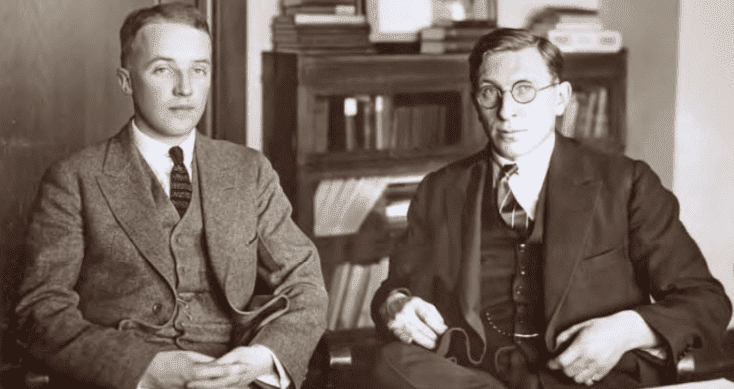
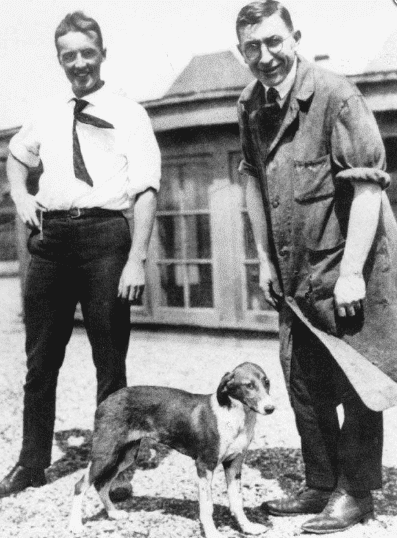
They encountered some difficulties at the beginning of their research. The scientists conducted medical experiments on animals. Only 14 dogs out of 19, which were involved in experiments, survived it. However, they didn’t give up. Inspired by the idea to invent a cure for a deadly disease, the doctor took a risk and sold all his property.
In 1920, Banting read an article describing a clinical case of a patient with blocked pancreas ducts and ductal stones, however, his diabetes stopped progressing. Thus, he decided to ligate the dogs’ pancreatic ducts and remove them after a few weeks. It didn’t give the desired effect, but it helped to further experiment in the right direction.
First insulin injections and results
At the end of 1921, Banting and his assistant Charles obtained an extract of an atrophied pancreas. They injected a dog that was in a coma. After that, the animal came to its senses, which meant the experiment was successful. Before that, it always ended with animal death.
Convinced that the injection was safe for use, they decided to conduct an experiment on humans. Thus, they injected a 14-year-old boy, Leonard Thompson, in 1922. His parents brought him to Toronto and agreed to the experiment, as the boy was in a coma and with a low chance to survive. After the first attempt, the child developed an allergy to an unfamiliar protein. Then the mixture was purified by biochemist J. Collip. The second time, the medicine had the desired effect and doctors saved the boy from death.
The next patient who was diagnosed with diabetes was a girl from Geneva. Thanks to the injection, she also managed to survive and died at the age of 72. Having succeeded in the practical part of the research, Banting wrote a doctoral dissertation on the results of his experiment. He became a Doctor of Medicine at the University of Toronto. In 1923, the doctor won the Nobel Prize and his medicine, called insulin, began to be released all over the world.