

Toronto is one of the leading filmmaking hubs in North America, ranking behind only Los Angeles and New York in scale—earning it the well-deserved nickname “Hollywood North.” Its transformation into a film powerhouse is the result of decades of infrastructure development, targeted government incentives, and the cultivation of a rich creative ecosystem. In this article on itoronto.info, we explore how Toronto built its thriving film industry, the pivotal role played by the Toronto International Film Festival (TIFF), the success of Pinewood Toronto Studios and Ontario Creates programs, why Hollywood filmmakers keep flocking to the city, and how cinema has reshaped Toronto’s urban and cultural landscape.
From 1950s TV Series to Global Acclaim: How Toronto’s Architecture Replaced New York Backdrops
Toronto’s cinematic history began long before the city gained its reputation as the Canadian counterpart to Hollywood. Its foundational steps were taken back in the mid-20th century, when foreign filmmakers first noticed the distinct character of its streets.
The turning point arrived in 1957 with the production of the American adventure TV series «Hawkeye and the Last of the Mohicans» (Hawkeye). For Toronto, this project went far beyond ordinary local broadcasting. It gave the city its first real opportunity to prove it could host and support a major international crew.

That experience had far-reaching consequences. It demonstrated that Toronto possessed the necessary infrastructure, architectural diversity, and adaptable urban landscape required for varied storylines. Over time, this architectural versatility became one of the city’s greatest competitive advantages over other film hubs.
In subsequent decades, the number of productions grew steadily. By the late 1970s, film and television production had become an essential pillar of city life. In 1979, Toronto Mayor John Sewell publicly highlighted Canada’s growing prominence in global filmmaking. This was a critical turning point: city leaders began to view film not just as a standalone business, but as a strategic economic driver.
Toronto quickly mastered the art of using its streetscape as a cinematic chameleon. One street could easily double for New York, another for Chicago, while a third could seamlessly pass for a European capital. The city didn’t need to build exact replicas of other metropolises—all it took was finding the right angle, street, or neighborhood.

This chameleon-like quality helped cement the city’s moniker as “Hollywood North.” Toronto began attracting more international productions than ever, turning its skyline and streetscapes into iconic cinematic backdrops—frequently playing the part of entirely different world cities on screen.
The “Toronto New Wave”: The Rise of Auteur Cinema and Independent Canadian Directors
Alongside the influx of Hollywood capital, Toronto developed its own distinct, authentic voice in Canadian cinema. During the 1980s and early 1990s, a cultural movement emerged that became known as the “Toronto New Wave.”
This collective of independent filmmakers offered a bold alternative to conventional commercial cinema. Key figures in this movement included:
- Atom Egoyan;
- Bruce McDonald;
- Don McKellar;
- Patricia Rozema;
- Peter Mettler;
- Jeremy Podeswa.
Drawing on documentary aesthetics and influenced by the provocative work of David Cronenberg, these auteurs explored complex themes of identity, psychology, and social change. The Toronto New Wave proved that the city was not merely a convenient backdrop for foreign blockbusters, but a powerhouse of high-caliber artistic cinema in its own right.

Why Hollywood Invests in Toronto: Key Incentives for Major Film Studios
Behind the glittering facade of “Hollywood North” lies a very pragmatic reality: economics. Toronto has become a magnet for major production companies thanks to competitive tax incentives, state-of-the-art soundstages, cutting-edge technical facilities, and a streamlined support network for film crews.
Tax Credits: The Deciding Factor for Producers
Both the Ontario provincial government and the Canadian federal government have established attractive financial incentives that significantly reduce the overall cost of film production.
A cornerstone of this strategy is the Ontario Production Services Tax Credit (OPSTC). Administered by Ontario Creates, the program allows eligible Canadian and international production companies to claim a 21.5% tax credit on qualifying expenditures incurred within Ontario, including local labor costs.
When combined with the 16% federal tax credit, productions can see total savings of up to 34.1% on eligible expenses. For major studio productions with budgets running into tens or hundreds of millions of dollars, these credits make a substantial difference to the bottom line.

For producers, choosing Toronto goes beyond scouting picturesque locations. These tax incentives allow studios to redirect substantial resources back onto the screen during the filmmaking process.
Pinewood Toronto Studios: Studio Power at Industrial Scale
Another major advantage is the city’s world-class studio infrastructure, led by the flagship Pinewood Toronto Studios complex located in the Port Lands district.
With over 490,000 square feet of dedicated production space—part of Toronto’s wider network of more than 2 million square feet of studio facilities—Pinewood Toronto Studios features 16 sound stages, including the massive purpose-built Mega Stage.
Facilities of this scale make it possible to build entire cinematic universes under one roof—from monumental set pieces to intricate visual effects environments. As a result, Toronto’s studio ecosystem can seamlessly host everything from long-running television series to multi-million-dollar global tentpoles.

Major studios such as Marvel and Disney, alongside iconic franchises including James Bond, Indiana Jones, and Batman, have all leveraged the city’s production power. Toronto is a go-to destination for high-end blockbusters, complex VFX, and cutting-edge animation projects.
However, world-class stages are only half the battle. Just as crucial is how swiftly production crews can scout locations, secure permits, and navigate city logistics.
That is where the Toronto Film Office (TFO) comes in. The municipal office assists productions with location scouting, fast-tracks permitting, and connects producers with top-tier local crews, serving as an indispensable bridge between film sets and city services.
In short, Toronto offers a complete, turn-key package for the film industry: robust financial incentives, massive soundstages, state-of-the-art tech, veteran crew talent, and a film-friendly city administration. This winning formula has elevated Toronto from a convenient shooting location into a serious rival to traditional global film capitals.
Cultural Transformation: The Impact of the Toronto International Film Festival (TIFF)
Film production has fundamentally reshaped Toronto’s social and cultural identity. The crowning jewel of this transformation is the Toronto International Film Festival (TIFF).

Since its inception, TIFF has grown into one of the most influential film festivals on earth, widely regarded as the ultimate launchpad for Academy Award campaigns. Every September, it draws hundreds of thousands of cinephiles, A-list stars, industry buyers, and world-renowned directors.
In 2010, the opening of its permanent headquarters—the TIFF Bell Lightbox—established a year-round cultural hub in downtown Toronto. This versatile cultural venue features:
- state-of-the-art cinemas showcasing Canadian, world, and arthouse cinema;
- art galleries and exhibition spaces;
- restaurants and educational media lounges.
Toronto’s film culture also places a strong emphasis on nurturing emerging talent. The city hosts an annual Student Film Festival showcasing free screenings of works by young creators aged 12 to 18. This cinematic momentum has catalyzed broader artistic movements across the city, powering major events like the all-night contemporary art festival Nuit Blanche and the multi-arts celebration Luminato.
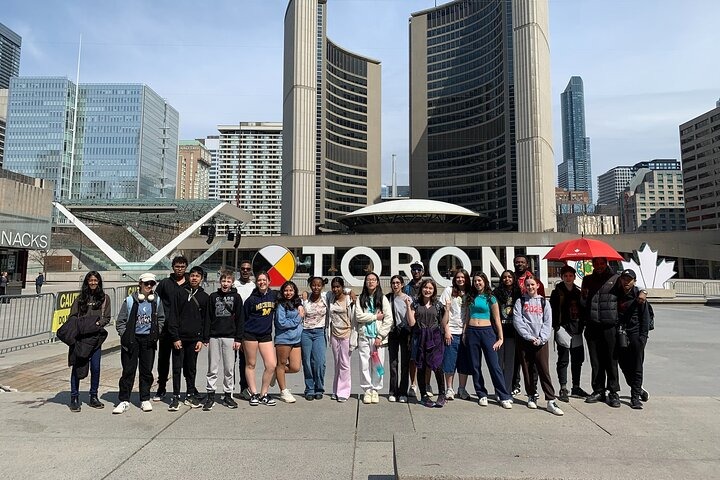
Toronto’s rise as a global filmmaking epicenter is a masterclass in collaboration among business, government, and the arts. By pairing competitive economic incentives for Hollywood giants with dedicated local infrastructure and support for indie filmmakers, the city has crafted a vibrant, resilient creative economy. As a result, Toronto has gained not only billions in investment and thousands of skilled jobs, but an enduring reputation as a dynamic, world-class cultural metropolis.