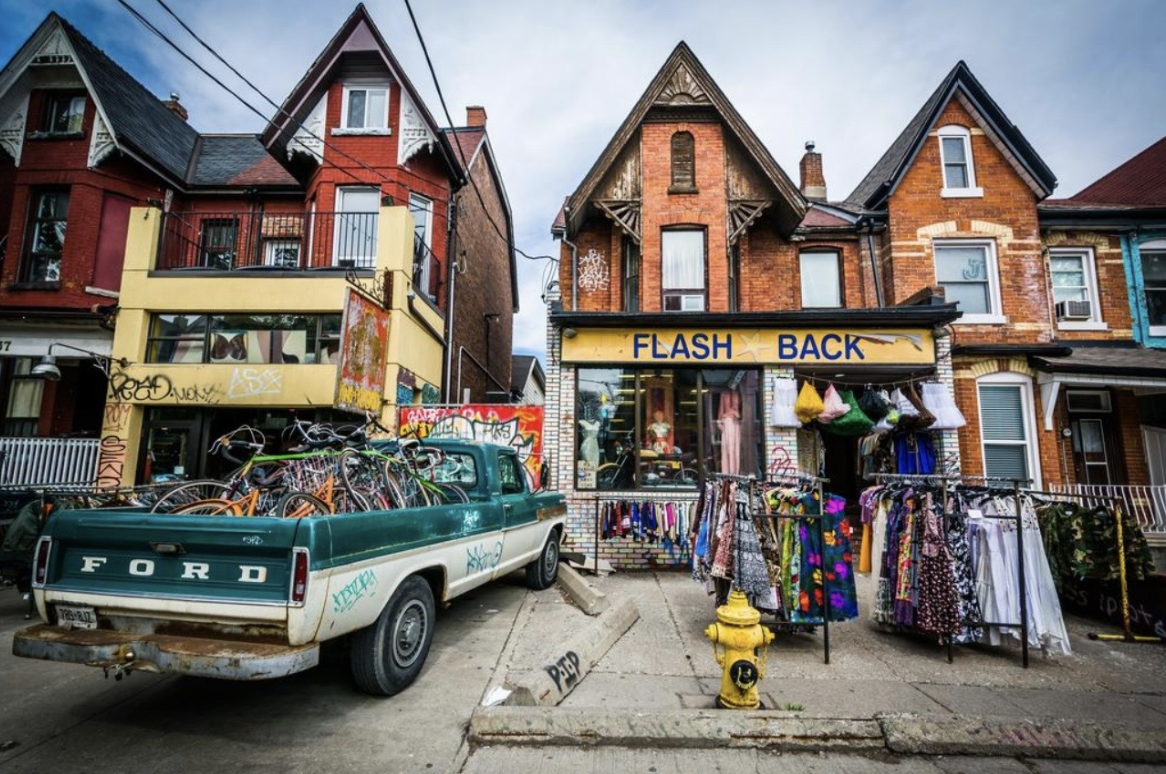

Toronto’s cultural neighbourhoods are the living history of the city, shaped by waves of immigration, urban transformations, and the traditions of dozens of ethnic communities. They have turned Toronto into one of the world’s most renowned multicultural metropolises, where each neighbourhood has its own distinct character, culinary scene, architecture, and cultural heritage. In this article on itoronto.info, we explore the history of Toronto’s ethnic neighbourhoods—from the legendary The Ward and early immigrant settlements to present-day Little Italy, Kensington Market, and Ukrainian hubs.
The Ward in Toronto: The First Immigrant Hub and Its History
The story of Toronto’s ethnic neighbourhoods begins in an area known as The Ward. From the 1840s until World War II, this district served as the first point of arrival for thousands of newly landed immigrants. Situated in the very heart of the city, the neighbourhood was bounded by College Street, Queen Street, University Avenue, and Yonge Street.
A diverse tapestry of communities made their home in The Ward: Irish, Jewish, Italian, Black, and Chinese immigrants. It was a densely populated enclave of crowded tenement homes, bustling with vibrant street life. Factory workers from the Eaton’s garment sweatshops lived side by side with street peddlers, Chinese labourers, and bootleggers.
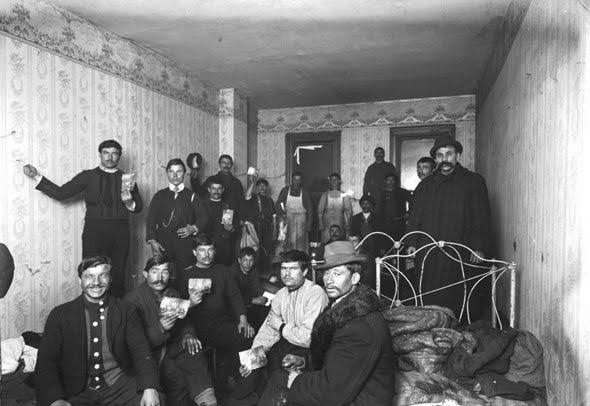
The Ward was Toronto’s initial gateway for newcomers. Despite harsh living conditions and urban overcrowding, it was here that early ethnic businesses and vital mutual-aid networks first took root.
The area faced continuous pressure from urban redevelopment and municipal authorities:
- 1909: The city demolished 8 acres (around 0.032 sq. km) of the neighbourhood to build the new Toronto General Hospital.
- 1911: The settlement house Central Neighbourhood House was established to support newly arrived immigrants.
- Late 1950s: City authorities completely cleared and bulldozed The Ward to make way for the new Civic Square (now Nathan Phillips Square) and Toronto City Hall.
The destruction of The Ward pushed immigrant communities westward and northward across the city, accelerating the rise of new ethnic enclaves such as Little Italy and Kensington Market.
The History of Little Italy in Toronto
Toronto’s Italian community first began to take shape in the mid-19th century. At the time, only a handful of Italians lived in the city—mostly educated professionals, travellers, and seekers of new opportunities. This presence expanded dramatically in the early 20th century, when thousands of Italian labourers began arriving in Canada.
The first large groups settled in The Ward, one of the most culturally diverse districts in Toronto at the time. Italian families concentrated particularly around the intersection of University Avenue and College Street. By the 1920s, however, the community had begun shifting steadily west of Bathurst Street.
The area surrounding College and Clinton Streets soon emerged as the vibrant new hub of Italian life. The neighbourhood known today as Little Italy did not develop overnight. Families settled first, followed by shops and artisan workshops, and soon after by cafes, restaurants, and social gathering spots where residents could connect and stay rooted in their heritage.
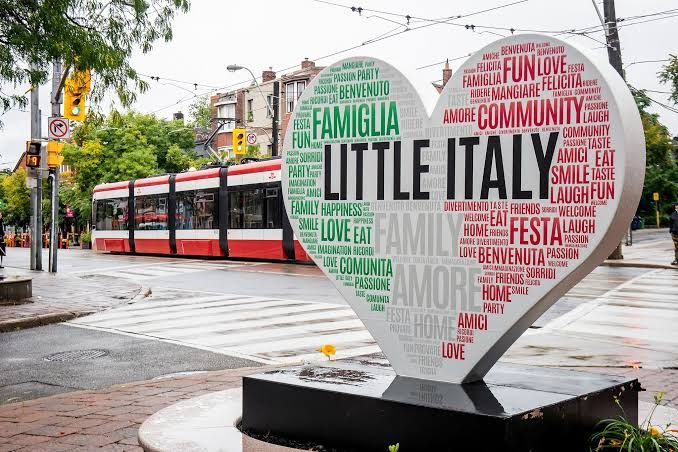
The largest wave of Italian immigration arrived in the post-war decades. Between the early 1950s and mid-1960s, Canada welcomed approximately 20,000 to 30,000 Italian immigrants each year. Many men began by doing strenuous physical labour in construction or manufacturing. Gradually, families achieved financial footing and began launching their own businesses.
College Street was soon lined with bakeries, fruit markets, butcher shops, and barber shops. Over time, these were joined by cafes, restaurants, theatres, and local media projects. In this way, the street evolved from a mere residential enclave into a dynamic showcase of Italian culture, woven seamlessly into Toronto’s everyday fabric.
A key figure who helped amplify the voice of immigrant communities across the city was Johnny Lombardi. Born in The Ward in 1915 to Italian immigrant parents, Lombardi founded CHIN Radio in 1966—one of Canada’s first multilingual radio stations. Broadcasting programming in numerous languages, the station helped Toronto’s ethnic communities maintain close cultural ties with their ancestral homelands.
By the late 1960s, the influx of Italian immigration began to taper off as Italy experienced rapid post-war economic growth, reducing the need for mass emigration.
Kensington Market: From Jewish Market to a National Historic Site of Canada
In the early 20th century, another iconic neighbourhood sprang up adjacent to Little Italy: Kensington Market. It was built up by Jewish immigrants from Eastern Europe alongside early Italian newcomers. At the time, it was one of Toronto’s poorest and most densely built residential enclaves.
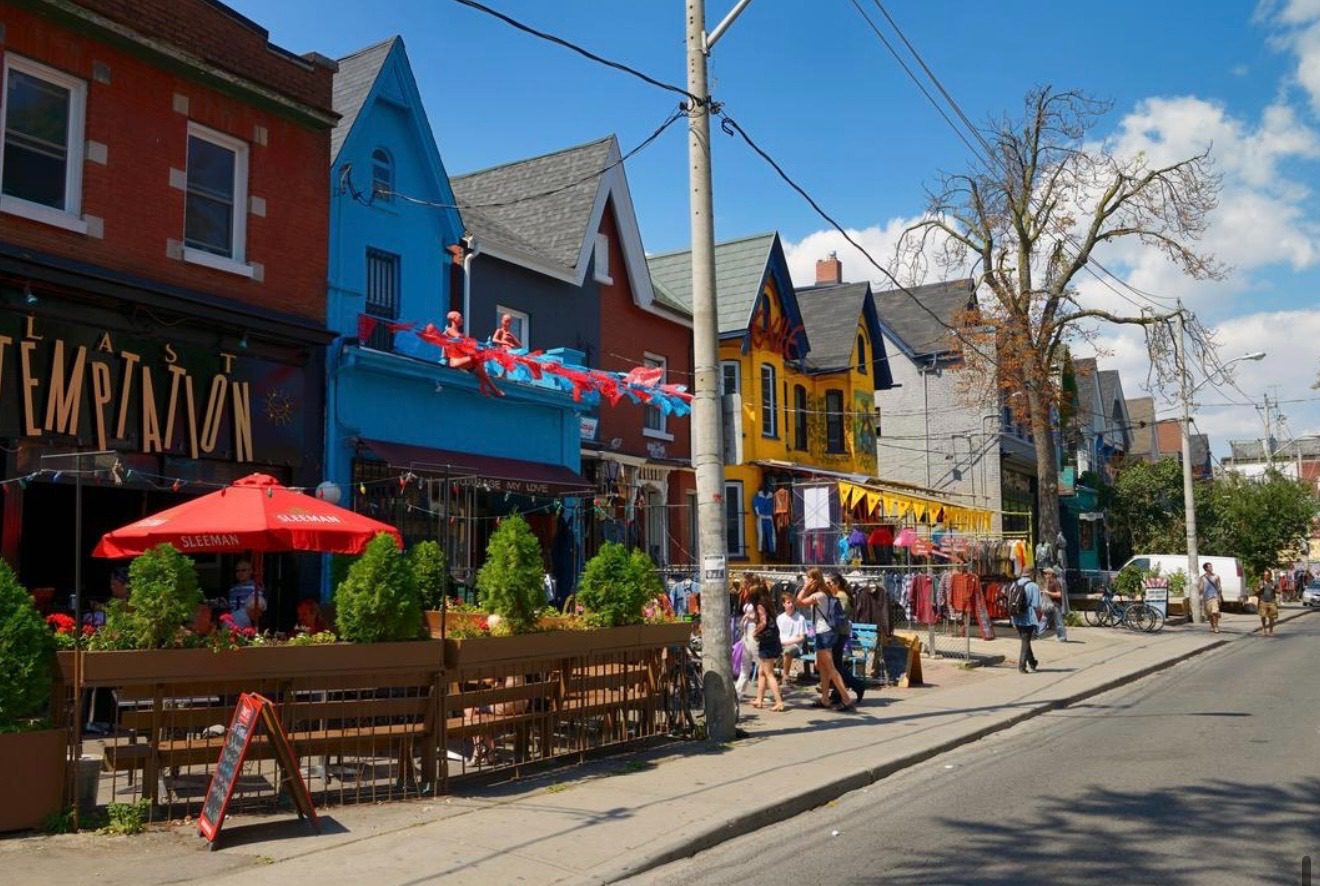
Throughout the 1920s and 1930s, the area was affectionately known as the “Jewish Market.” Roughly 60,000 Jewish residents lived in and around Kensington. The neighbourhood bustled with trade: tailors, furriers, bakers, and merchants of traditional goods operated here side by side, and the area was home to around 30 synagogues.
Over the decades, Kensington Market blossomed into a bohemian, multicultural arts hub. Today, the neighbourhood is designated a National Historic Site of Canada.
Defining features and traditions of Kensington Market:
- Pedestrian Sundays.
Monthly celebrations when market streets are completely closed to vehicular traffic, giving way to buskers, local artists, and outdoor fairs.
- Kensington Winter Solstice Festival.
An annual celebratory carnival featuring an illuminated parade, hand-crafted lanterns, and fire performers.
- The Garden Car.
The neighbourhood’s iconic public art installation—a decommissioned car transformed into an urban community garden bed.
- Preserving affordable housing.
In 2021, Toronto City Council approved $3 million in funding for a local community land trust to acquire and preserve heritage properties in the area as permanent affordable housing.
Toronto’s Chinatown: The Evolution of the Chinese Community from The Ward to the Greater Region
Toronto’s Chinese community developed its presence alongside other ethnic groups. The earliest Chinese labourers, who had come to work on the transcontinental railway, began settling in The Ward along York Street and Elizabeth Street, just north of Union Station.
By World War II, The Ward had become Toronto’s first official Chinatown. Following the large-scale expropriation and clearance of The Ward in the late 1950s, Chinese businesses and residents relocated westward to the intersection of Spadina Avenue and Dundas Street West, establishing the downtown Chinatown that thrives today.
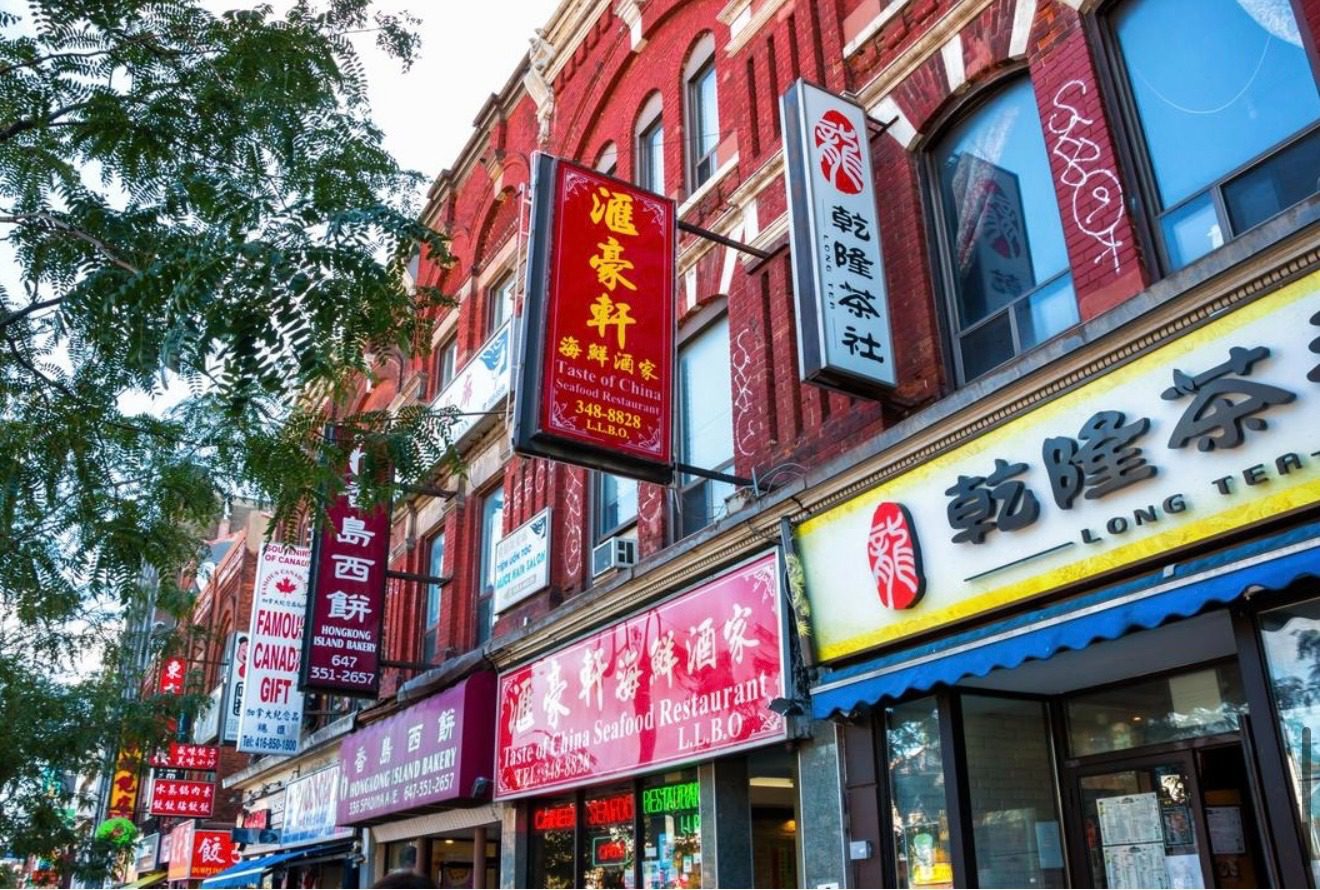
In subsequent decades, the community expanded well beyond the historic core, giving rise to vibrant enclaves across the suburbs and the Greater Toronto Area (GTA) that function as major cultural and economic centres.
The Ukrainian Diaspora in Toronto: Settlement History, Population Growth, and Heritage
The Ukrainian community has long been an influential pillar of Toronto’s social and cultural landscape. At the start of the 20th century, Ukrainians in Toronto were few in number. According to the 1921 census, just 1,149 individuals of Ukrainian descent lived within the city proper—representing around 0.2% of the population—and 1,247 across the broader metropolitan area. Over the subsequent decades, however, the community experienced rapid growth. By 1961, Toronto counted 26,097 Ukrainian residents (around 3.9% of the municipal population), while the metropolitan total reached 46,650.
By 1971, the Ukrainian population within city borders stood at 22,620, while the broader metropolitan area had reached 60,755. Further growth increasingly occurred throughout the surrounding suburbs. In 1996, approximately 95,500 people of Ukrainian origin resided in the GTA, rising to 104,485 in 2001 and 122,510 in 2006. By the 2021 census, Toronto proper was home to 61,560 Ukrainians, with 122,925 across the greater metropolitan area.
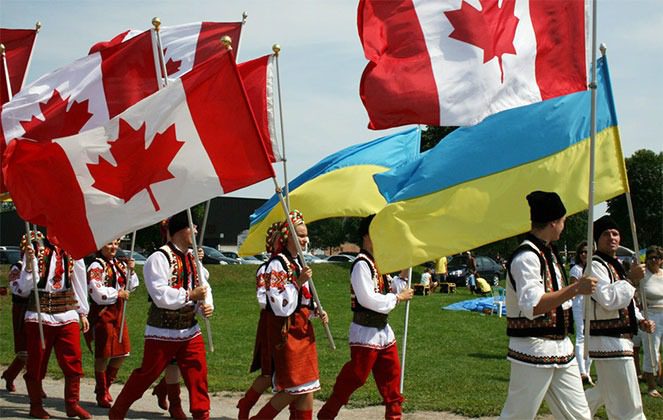
A distinct chapter in the community’s history began with Russia’s full-scale invasion of Ukraine. Following February 24, 2022, Canada launched the Canada–Ukraine Authorization for Emergency Travel (CUAET), an emergency pathway that allowed displaced Ukrainians and their family members to find temporary refuge and work in Canada. The program accepted applications until July 15, 2023, welcoming over 300,000 Ukrainians and their dependents. According to Government of Canada figures, as of March 31, 2026, arrivals under CUAET totalled 308,720 individuals.
Following the close of new applications under CUAET, Canada extended dedicated support measures for Ukrainians already residing in the country. In particular, holders of open work permits issued under Ukrainian special measures can maintain their legal status and employment in accordance with active regulations. Today, Toronto’s Ukrainian community comprises not only the descendants of several historic immigrant waves, but also tens of thousands of recent arrivals displaced by war since 2022. This has sparked a new phase of development across the city’s Ukrainian fabric—from heightened demand for Ukrainian-language services and schooling to an outpouring of new cultural, volunteer, and professional initiatives.
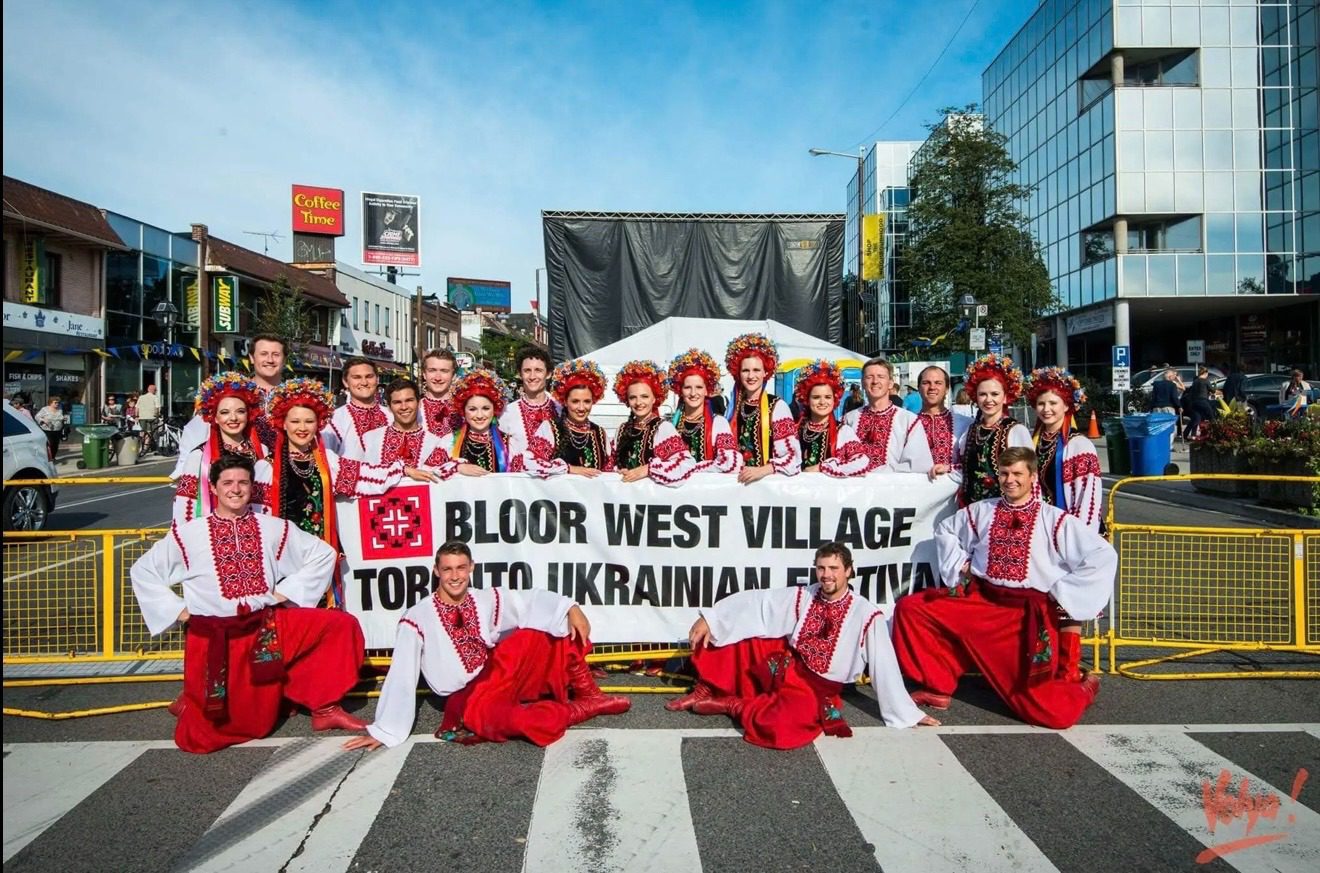
The rise of Toronto’s ethnic neighbourhoods is a story of resilience, industriousness, and mutual cultural enrichment. From the humble, lively quarters of The Ward to the storied streets of Little Italy, Kensington Market, and Ukrainian hubs, every wave of newcomers has added distinct colour to the urban fabric. Honouring and preserving this heritage is what makes Toronto one of the most uniquely welcoming metropolises in the world.