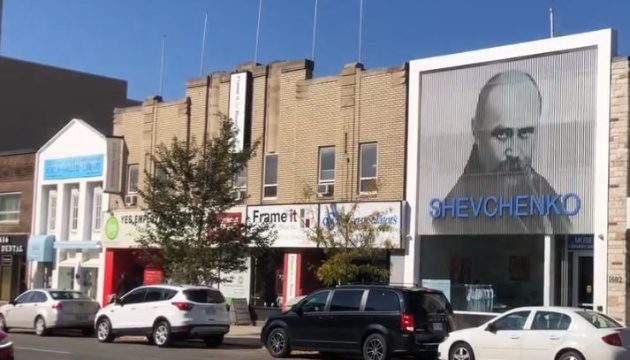

The Taras Shevchenko Museum in Toronto is a renowned cultural landmark, cherished by both residents and visitors. Its exhibits celebrate the life, works, and legacy of Taras Hryhorovych Shevchenko, the great Ukrainian poet and artist. Learn more about the establishment and evolution of this iconic museum on itoronto.info.
Honouring Ukrainian Culture

In 1947, the Ukrainian Canadian Society decided to establish a small summer camp. With funds raised by its members, the society purchased a 120-acre plot of land on Highway 5 near the village of Palermo.
In 1950, to mark the 60th anniversary of Ukrainian immigration to Canada, the society planned a national festival of music, song, and dance. This celebration would also include the unveiling of a monument to Taras Shevchenko, the distinguished Ukrainian poet and artist.
That same year, at Ukraine’s request, a large bronze figure of Shevchenko—consisting of 121 pieces—was sent to Canada. Ukrainian sculptors Oleksa Oliinyk and Makar Voronksyi crafted the statue. The assembly and installation of the Shevchenko statue in Toronto’s Memorial Park were managed by Max and Stanley Ilomaki.
To cover the costs of the monument and the development of Memorial Park, a nationwide fundraising campaign was launched. The response was overwhelmingly positive, with significant donations pouring in. Encouraged by this success, the society began planning the construction of a museum adjacent to the monument, envisioned as a space to house exhibits highlighting Shevchenko’s legacy and the history of Ukrainian settlement in Canada.
Before construction began, volunteers and society members started collecting articles and materials about Shevchenko’s works and legacy. This initiative introduced many Ukrainians in Canada to the richness of their heritage, inspiring a deeper understanding of their contributions to Canada’s social, economic, and cultural life.
On June 30, 1951, the 60th anniversary of Ukrainian immigration was celebrated with a concert at Maple Leaf Gardens, featuring 1,500 performers. The following day, on Canada Day, over 40,000 people gathered for the official unveiling of the Shevchenko monument at Memorial Park.
Opening of the Museum

By 1952, construction of the museum was completed. The surrounding farmland was transformed into a park with over 500 young trees planted and 400 feet of grass seeded. On Canada Day 1952, the Taras Shevchenko Museum officially opened its doors.
At its inception, the museum featured 500 exhibits brought from the National Taras Shevchenko Museum in Kyiv, including:
- A vast collection of Shevchenko’s literary works.
- Reproductions of his oil paintings.
- Photocopies of archival documents.
- Musical compositions inspired by Shevchenko’s themes.
- Paintings depicting the poet’s life.
These artifacts were displayed across four rooms, occupying approximately 2,000 square feet.
Over the following decades, the museum welcomed visitors from Canada, the United States, Ukraine, and other countries. Tragically, a fire broke out in the early hours of September 16, 1988, destroying all but the bronze posthumous statue of Taras Shevchenko.
Determined to rebuild, donors from across Canada rallied to fund the museum’s restoration. Olga Polianychko, then director of Kyiv’s National Taras Shevchenko Museum, traveled to Canada, bringing with her 30 works of art.
In September 1995, the rebuilt Taras Shevchenko Museum reopened at 1614 Bloor Street West. The new museum housed a collection surpassing the original in size and diversity, including rare books and extensive research materials.
The Modern Museum

Today, the museum focuses on preserving and showcasing Taras Shevchenko’s life, works, and literary legacy. The collection includes numerous editions of Kobzar, reproductions of Shevchenko’s paintings commissioned in Ukraine, and a rare book collection known as “Shevchenkiana,” donated by collector David Ovcharenko.
Additionally, the museum preserves works by other prominent Ukrainian artists. Its extensive collection of Ukrainian crafts, folk art, documents, artifacts, and tools highlights the rich cultural heritage of Ukraine.
In 2018, the museum relocated to 1604 Bloor Street West. In 2019, the “Shevchenkiana” library was officially opened at the museum, featuring over 1,200 volumes of prose and poetry by Shevchenko. Guided tours are available in both Ukrainian and English.
The Taras Shevchenko Museum in Toronto stands as a testament to the enduring legacy of one of Ukraine’s greatest cultural icons and the contributions of the Ukrainian community to Canadian society.