
Over the years, the building that once housed High Park Sanitarium served various purposes. It began as a luxurious residence for a Toronto mayor, later became a maternity home, then fell into disrepair, and eventually transformed into a penthouse housing seven condominiums. The property gained its greatest renown during its time as High Park Sanitarium. The owners were dedicated to providing exceptional services and consistently refined their methods. More on itoronto.
Early Years of the Sanitarium
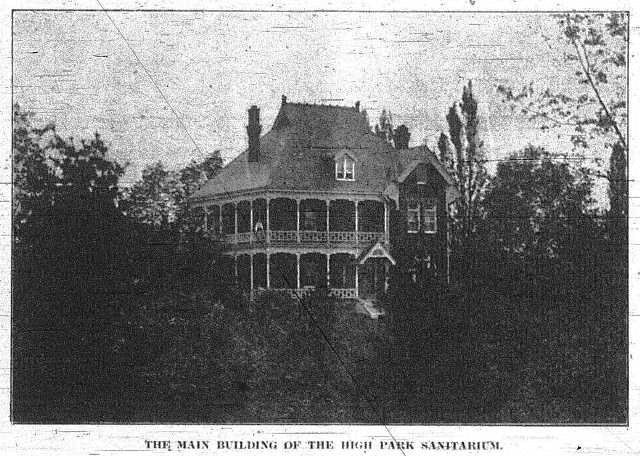
In the 1880s, Toronto businessman and politician George Johnston St. Leger purchased a small parcel of land south of Bloor Street. In 1889, he built a lavish residence at 32 Gothic Avenue, naming it Clandeboye after a notable Irish estate. Offering stunning views of Lake Ontario and High Park, this home served as St. Leger’s residence during his tenure as mayor of Toronto in 1890. Over time, the property was rented out and eventually changed ownership.
In 1906, the house was purchased by William J. McCormick, a Belleville-born doctor. After completing his medical education in the United States, McCormick returned to Toronto in 1905 with his wife Florence. The couple bought the mansion and commissioned architects to remodel it into High Park Sanitarium.
The project for the remodel was inspired by Dr. John Harvey Kellogg, director of the Battle Creek Sanitarium in Michigan. McCormick had the opportunity to learn the fundamentals of operating such a facility directly from Dr. Kellogg.
On June 27, 1907, High Park Sanitarium was officially inaugurated. The opening ceremony featured a speech by Dr. Kellogg himself, who wished McCormick success in his endeavor. The sanitarium quickly gained popularity, often exceeding its capacity due to high demand.
Services Offered by the Sanitarium
High Park Sanitarium provided treatments for a variety of conditions, including paralysis, neuritis, rheumatism, anemia, obesity, diabetes, and more. The treatment philosophy mirrored that of Battle Creek Sanitarium, emphasizing health improvement through minimal reliance on medication. The core principles included proper nutrition, physical activity, outdoor walks, hydrotherapy, and electrotherapy.
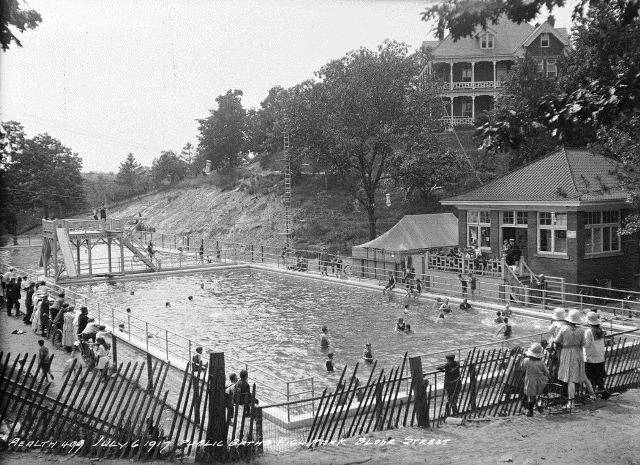
Until 1913, the sanitarium did not have a functioning swimming pool. However, visitors had access to clean spring water with beneficial mineral properties.
In 1913, a swimming pool was introduced, becoming an immediate summer attraction. The McCormicks hired professional swimmers to ensure the facilities were welcoming and accessible to all.
In 1922, Florence McCormick passed away, followed by the death of their only son the following year. Overcome with grief, William McCormick decided to close the sanitarium, though he maintained the mineral baths due to their health benefits. He transitioned to private practice, focusing on the study of vitamins and their effects on the human body.
The swimming pools remained operational until 1962, closing due to underground construction for the Bloor-Danforth subway line. Dr. William McCormick lived to the age of 88, earning a place in history as the proprietor of High Park Sanitarium and a champion swimmer.