In the 1820s, falling ill or being injured in Toronto was a truly harrowing experience. The city’s first civilian hospital, a modest brick structure on King Street and John Street, was staffed by caring military doctors from Fort York. However, diseases and infections that are now considered treatable were often fatal back then. I Toronto delves into the history of Toronto’s early hospitals and their evolution.
General Information About TGH
The Toronto General Hospital (TGH) is the oldest and largest hospital in Toronto. For over 165 years, it has been providing emergency services to the community. Located in the heart of the city, its emergency department treats more than 30,000 patients annually. The hospital is a global leader in healthcare, pioneering numerous innovations over the years.
The Toronto General Hospital was established in 1829 and was initially known as the York General Hospital, reflecting the city’s name before it was incorporated as Toronto in 1834. At that time, the hospital was located at the corner of King Street and Simcoe Street.
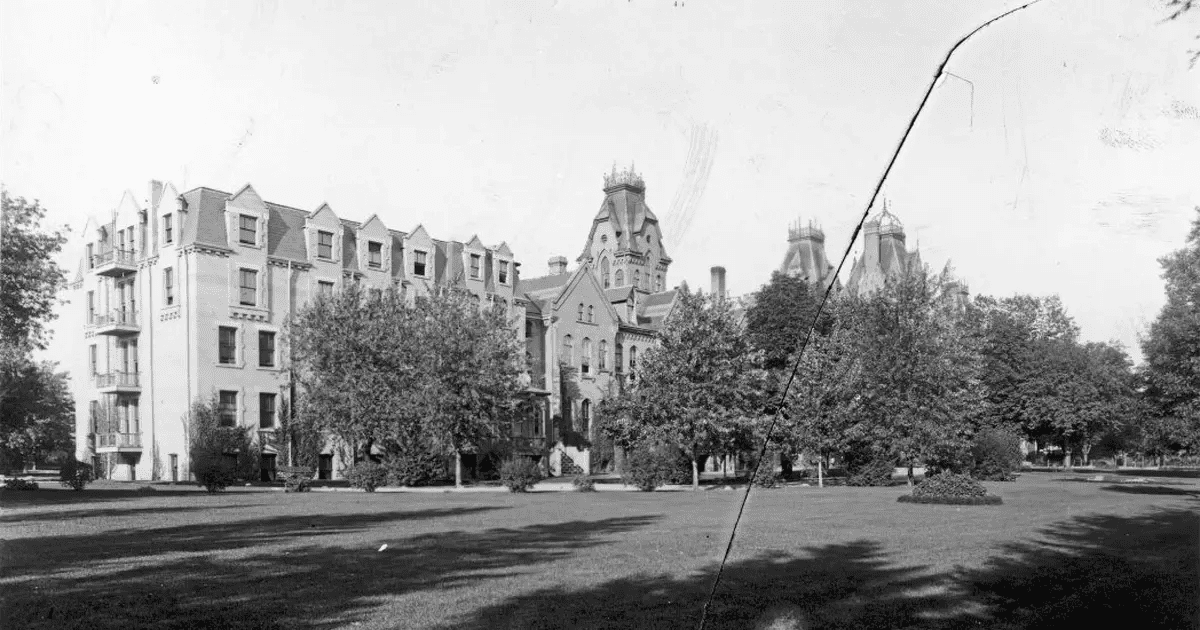
Established in 1829 and originally called the York General Hospital, reflecting the city’s name before it became Toronto in 1834, the hospital initially stood at the corner of King Street and Simcoe Street. By 1856, the facility had outgrown its original premises and relocated to a larger building at the end of Gerrard Street, where it remained for 57 years.
In 1877, the idea of founding a nursing school affiliated with the hospital was proposed. The first such school in the United States opened at Bellevue Hospital in New York in 1873, while Canada’s first nursing school was established the same year at the General and Marine Hospital in St. Catharines.
The Hospital Building
The city’s first medical centre, one of three general hospitals in Toronto’s early history, was funded by a £4,000 donation from the Society of Loyalty and Patriotism. This charitable organization was formed after the War of 1812 to provide for the widows and orphans of fallen soldiers. The remaining funds on the group’s account were used to establish the hospital.

Architect John Ewart, who also designed the original part of Osgoode Hall, created the hospital’s plans. The building cost £3,000 and covered just 4,356 square meters of a large plot stretching west to Peter Street. With two stories, it was deemed sufficient for a population of fewer than 20,000. In 1823, the government of Upper Canada confiscated the building to use it as a legislative house, postponing its use as a hospital.
The building initially served as the second Parliament House for Upper Canada after the first was burned down during the War of 1812. When the second building was accidentally destroyed by fire, the property was returned for use as a hospital, conveniently coinciding with a measles epidemic that year, ensuring doctors and undertakers were kept busy.
The Darkest Times for the Hospital
The summer of 1847 brought the Toronto General Hospital its greatest challenge. The Irish Famine forced thousands of typhus-infected refugees to flee to Canada. Despite screening efforts to prevent contagious individuals from entering, up to 1,000 infected people arrived in Toronto daily, overwhelming the city’s limited resources. Many others died en route and were buried at sea.
Bishop Michael Power, Toronto’s first Roman Catholic bishop, advocated for the construction of wooden fever sheds on hospital grounds to accommodate the sick. He and others who worked alongside the ill eventually succumbed to the disease themselves. The dead were transported to St. Paul’s Basilica on Queen Street West, where coffins were stacked in large trenches due to time constraints on digging individual graves.

In later years, construction projects unearthed human remains beneath school playgrounds and buildings near these sites. Many were relocated to other cemeteries, but others remain sealed beneath modern developments. The typhus epidemic underscored the need for a larger hospital, but funding remained insufficient, and the John Street building was unsuitable for Toronto’s growing population. Eventually, the property was sold, and the hospital relocated.
The Toronto Western Hospital and Nursing School
In 1854, the second general hospital was completed at the northwest corner of Gerrard Street and Sumach Street near the Don Valley, chosen partly for its affordable land. Concerns were raised about the site’s isolation and association with diseases like malaria, but in 1856, the 22-bed facility opened, accommodating up to 400 patients. It included spaces for emergency surgeries, maternity care, an operating theatre with a viewing gallery, and even a museum room on the upper floors.
Scottish architect William Hay designed the building in an Old English style, featuring prominent roof towers. Despite its utilitarian design, the hospital served as Toronto’s primary medical facility for 60 years.
In 1861, the hospital established Canada’s second nursing school. Initially, students lived within the hospital wards, and their dormitory and dining conditions were rudimentary. Early graduates included women already working in the hospital, and the first graduating class consisted of just five students. Over time, the program evolved to include theoretical and practical training, laying the foundation for modern nursing education.


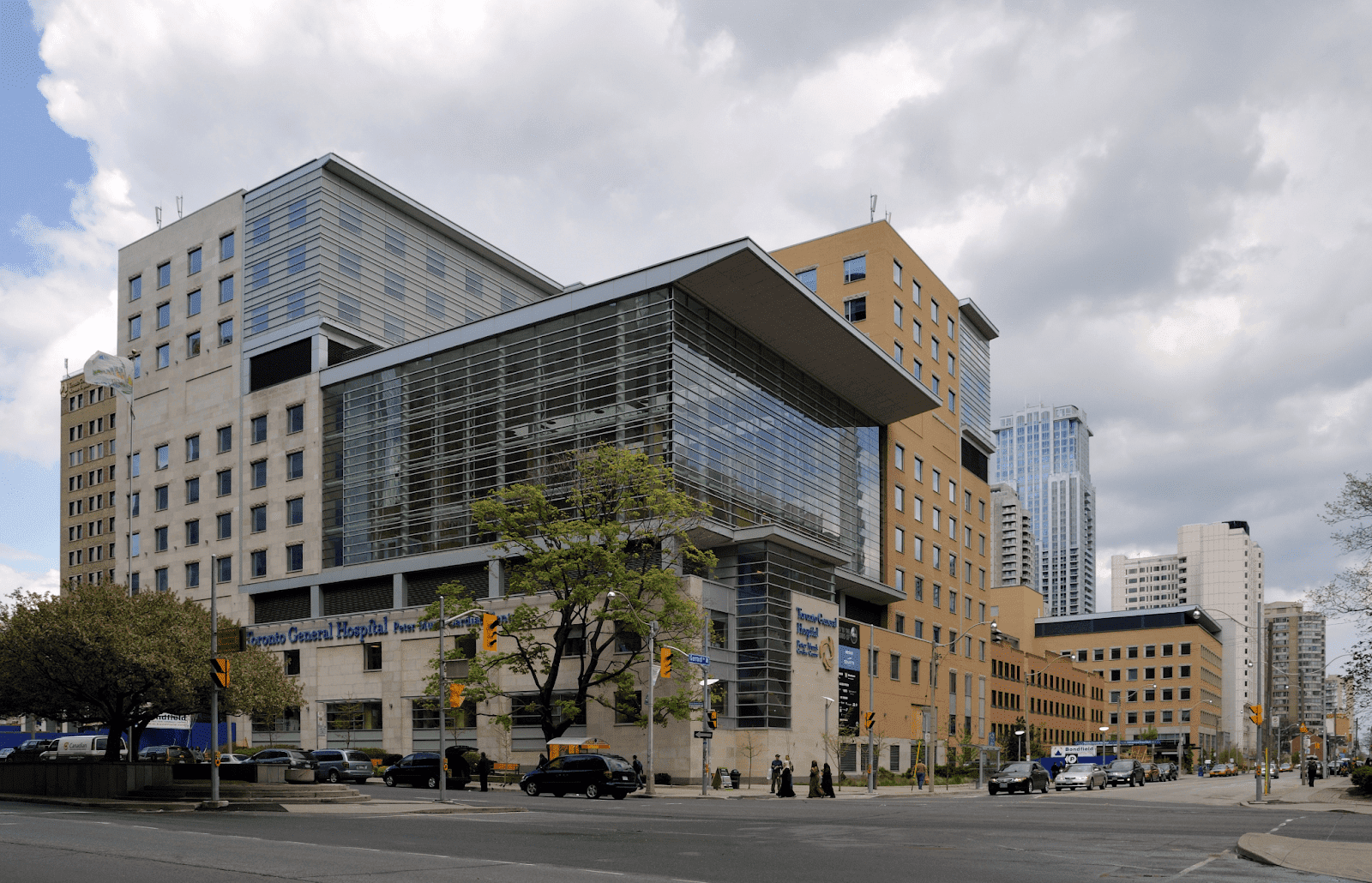
By June 1913, the Toronto General Hospital moved to its current location on College Street. Its central brick building is now part of the MaRS Discovery District. The original locations are marked only by simple plaques, preserving their historical significance.
The hospital’s journey from humble beginnings to its status as a leader in global healthcare reflects Toronto’s growth and commitment to advancing medical care.