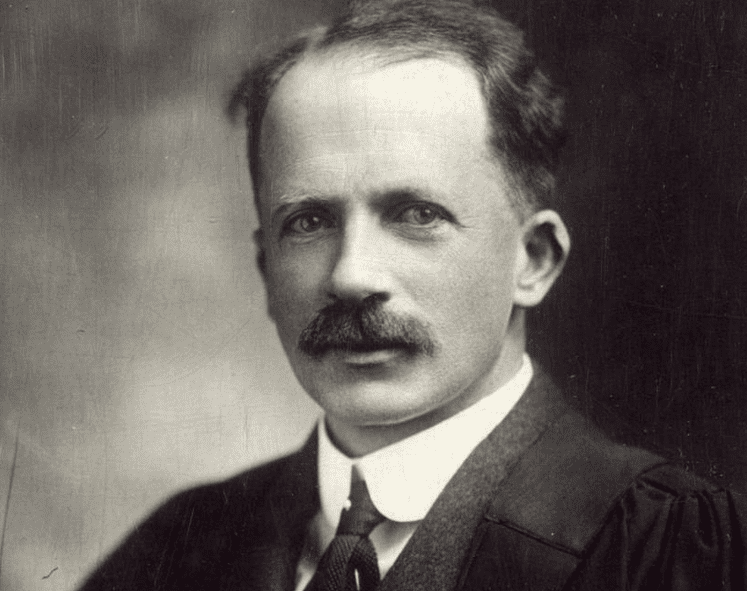

Scottish physiologist John Macleod appeared at the centre of a scandal, which erupted around the Nobel Prize Award for the invention of insulin. At that time, as several decades ago, diabetes remained a serious disease. Scientists around the world tried to invent a medicine that would save the lives of diabetics. In the 20s of the 20th century, scientists managed to conduct successful experiments on animals for the first time. Later, the first patient was cured with the invented medicine. The scientific discovery made a real breakthrough in medicine, and the names of Frederick Banting and John Macleod went down in history. Learn more at itoronto.info.
Who was John Macleod?
John Macleod was born in 1876 in a small Scottish town to the family of the priest Robert Macleod. He graduated from the gymnasium and then entered the Marischal College, the University of Aberdeen, where he studied medicine.
In 1898, he got a doctor’s diploma with honours for his diligent studies, which gave him the opportunity to work at the Carl Ludwig Institute of Physiology at Leipzig University. Then John Macleod held the position of a Professor of Physiology in London, Cleveland (USA) and Montreal (Canada).
The new page of his career development began in 1918 when the scientist was appointed a Professor of Physiology at the University of Toronto (Canada). John Macleod headed the Physiology Laboratory and was the deputy dean of the medical faculty. Ten years later, he received an invitation to work as a Professor of Physiology at the University of Aberdeen.
John Macleod’s name is associated in medicine with his work on carbohydrate metabolism. In addition, the professor helped Frederick Banting and Charles Best to invent insulin. For that discovery, Macleod and Banting received the Nobel Prize. However, that award was followed by a huge scandal and misunderstanding.
John Macleod was the author of many scientific works and studied various fields of medicine. The scientist was interested in the phosphorus content in muscles, the functioning of the vestibular apparatus and the chemical composition of the tubercle bacillus.
Macleod has established himself as a successful teacher and academic advisor. Students liked the way the Professor conducted his lectures. His colleagues considered him a modest and responsible worker.
The scientist devoted his entire life to medicine, but he also had other hobbies. He was interested in golf, gardening and art. In the last years of his life, the doctor struggled with the disease. The heart of the outstanding physiologist stopped beating in 1935.
Successful experiments at John Macleod’s laboratory
In the 21st century, diabetes is one of the top three disabling and deadly diseases. The incidence is increasing every year, although scientists are constantly inventing new medicines or improving already existing ones.
At the beginning of the 20th century, John Macleod’s laboratory was the only scientific institution in Canada whose employees researched diabetes and tried to invent miraculous means for its treatment. That scientific centre operated on the basis of the University of Toronto.
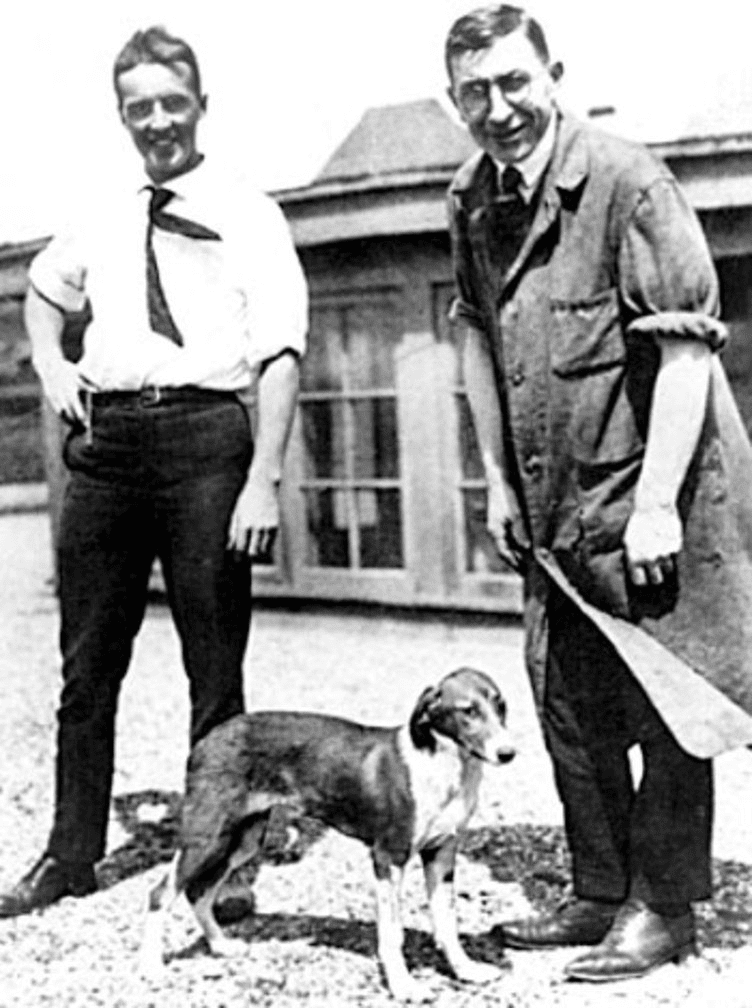
Canadian Frederick Banting actively studied the processes in the human body and paid special attention to the problem of diabetes treatment. The scientist had to conduct experiments to develop his study. Therefore, he turned to John Macleod asking his permission to work in his laboratory for a while.
At first, the Scottish physiologist didn’t believe in the success of the experiments, because all the efforts of other scientists had ended in failure. Macleod left Canada and went to Scotland for a two-month vacation.
However, Banting and his assistant Charles Best were strongly determined. At first, they faced some difficulties, but the scientists didn’t give up because they believed in their victory. Macleod became interested in the experiments when scientists managed to reduce the sugar level in the urine of test dogs. He decided that Banting needed another assistant, the biochemist James Collip.
In 1921, Banting and Macleod reported before the American Physiological Society. Unfortunately, Frederick Banting lacked theoretical knowledge. He received many questions after the presentation and couldn’t answer them clearly. So, his colleague came to the rescue. The results of the experiment impressed the present and the scientists began testing the medicine on humans.
In 1922, a sick boy, Leonard Thompson, was injected with insulin and started to recover. The scientists’ success became known all over the world. In 1923, Frederick Banting and John Macleod were awarded the Nobel Prize. Banting didn’t like that the commission decided to award Macleod too. So, the Canadian surgeon gave half of his prize money to his assistant Charles Best and John Macleod shared it with James Collip.