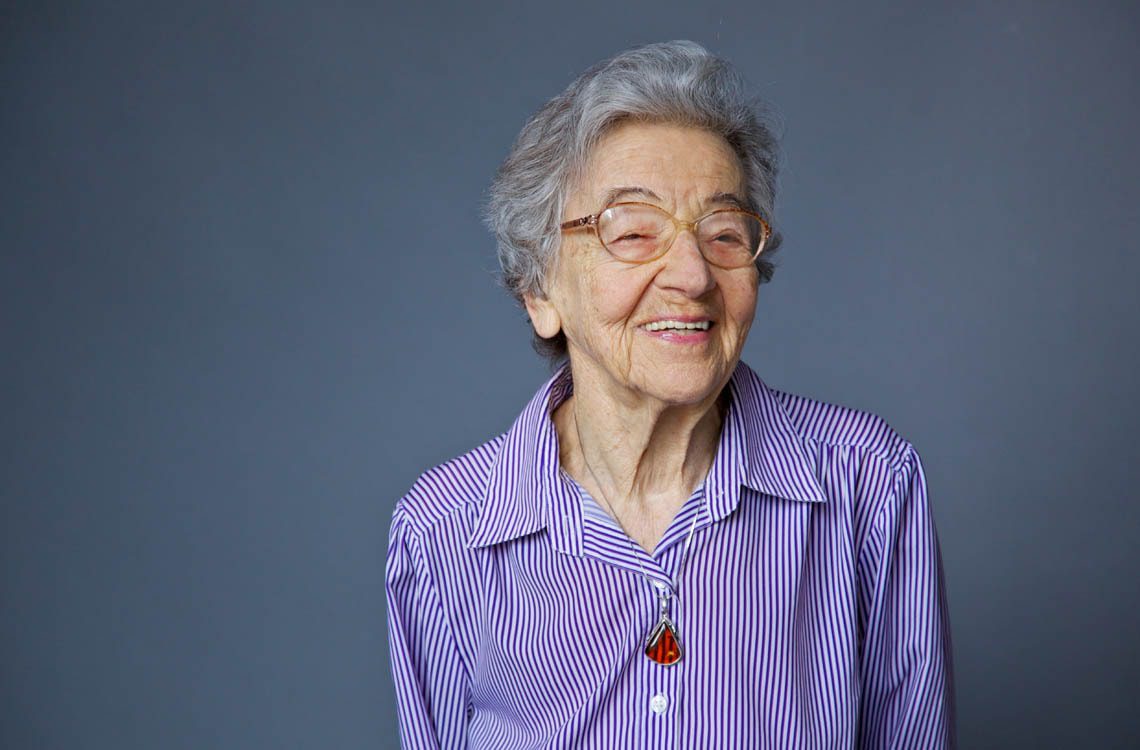

Ursula Franklin lived a long and beautiful life. She was an active woman and fought for a better future for her family for almost 95 years. She survived the Second World War and spent 18 months in a Nazi camp, where she got frostbite and suffered from constant pain. Ursula Franklin was persecuted for her Jewish origin. Her mother’s family was tortured to death. However, the woman didn’t give up, became strong and helped other people in need. She emigrated to Canada, became a scientist and went down in history as the first female professor at the University of Toronto. Learn more at itoronto.info.
Biographical reference
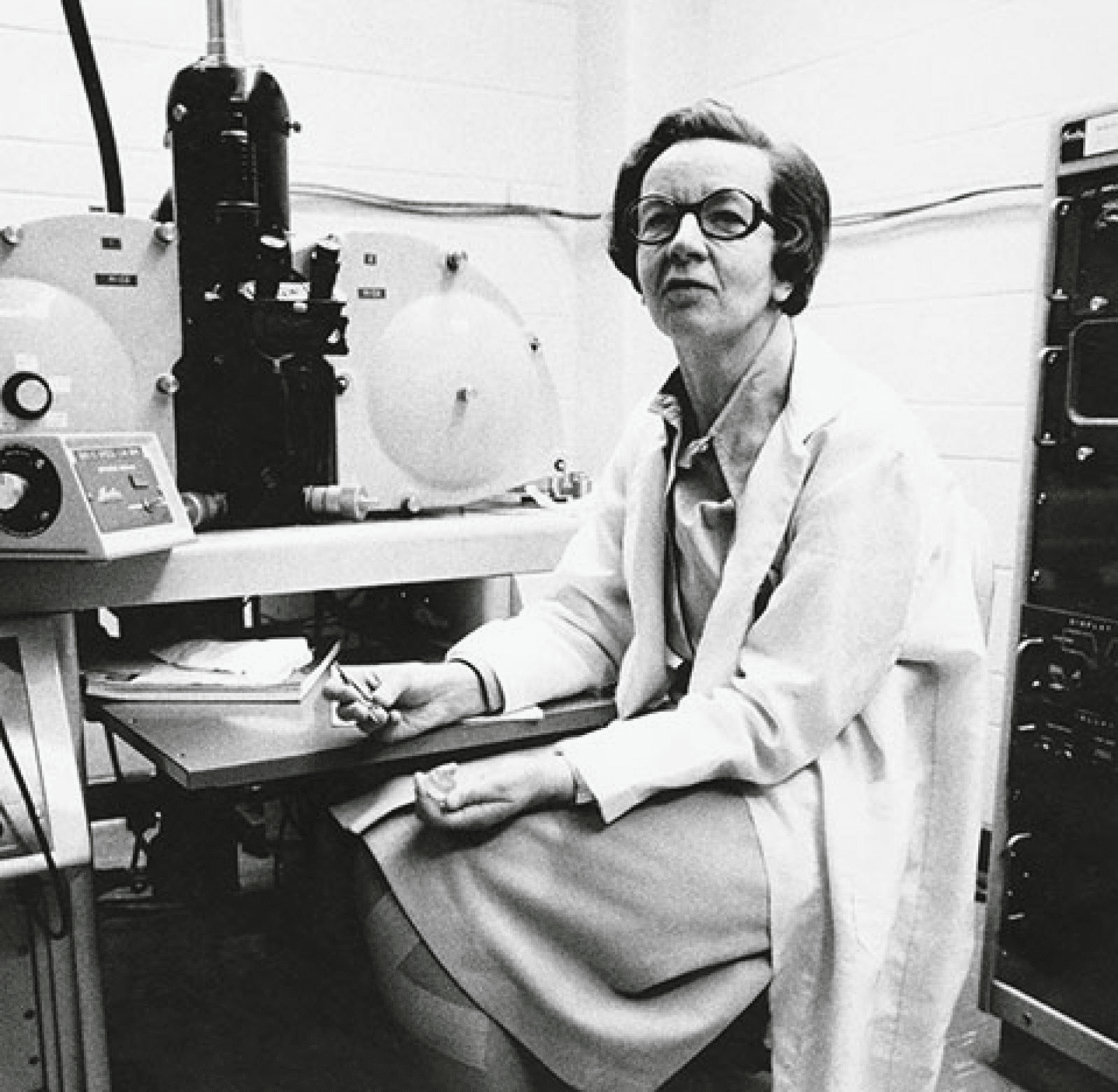
Ursula Maria Martius was born in the German city of Munich in 1921. Her father Albrecht Martius was an archaeologist and professed Lutheranism. Her mother Ilse Maria Martius (maiden name Sperling) was an art historian and was brought up in a Jewish family. In 1940, the future scientist moved to Berlin. Ursula entered Berlin University, where she studied physics and chemistry. She became interested in science at an early age thanks to her parents’ friend and physicist Hans Kuppenheim.
During the Second World War, the student was expelled from the university because of her Jewish origin. She ended up in a Nazi camp in 1943 and spent several months there. The harsh conditions of the prison had a negative impact on the woman’s health. The affected lymphatic vessels of the legs didn’t recover and became the cause of regular pain that accompanied Ursula throughout her life. Her parents were also in concentration camps and managed to survive. Her mother’s Jewish family was murdered.
After the war, the family reunited in Berlin. Ursula resumed her studies at the university, and in 1948, completed her doctoral studies at the Department of Experimental Physics. The following year, she moved to Canada, where she settled down and continued her scientific activities. Then Ursula Martius met Fred Franklin, who was an immigrant too. They got married in 1952. The couple had two children, a son Martin and a daughter Monica.
The scientist was a comprehensively developed personality. She fought for women’s rights, left behind many scientific works and took care of their archiving. She gave a lot of interviews. Ursula Franklin was an excellent orator and knew how to engage the audience with her speeches. She had many friends, but her husband, with whom she lived for more than 60 years, was her best adviser and faithful companion. The physicist died two months before her 95th birthday in 2016.
Scientific and social activities of Ursula Franklin
Ursula Franklin proved herself in many scientific spheres. She is considered a pioneer in the development of archaeometry. It is a scientific discipline that applies modern methods of material analysis to archaeology. From 1952 to 1967, the scientist was a senior researcher at the Ontario Research Foundation. After that, Ursula Franklin worked for a long time at the University of Toronto, where she received the honorary title of the first female professor in the Department of Metallurgy and Materials Science.
In the 1970s, she was a member of the Science Council of Canada and worked on the preservation of natural resources and wildlife. In her report Canada as a Conservation Society, Ursula Franklin outlined ways to reduce waste and singled out steps to improve the state of the environment.
In addition to science, Ursula Franklin was a public activist and advocated for women’s rights. Along with other former female professors at the University of Toronto, she won compensation for more than 60 female professors who were unfairly underpaid compared to their male colleagues.
Ursula Franklin has been awarded many prizes and medals. In 1995, a high school in Toronto was named after her, and in 1999, the Ursula Franklin Award was established.