

Have you ever considered that the filter on your smartphone is more than just a filter—it’s genuine science? Meet Parham Aarabi, the mind behind some of the world’s most famous virtual makeup technologies. He doesn’t create lipsticks or eyeshadows, but his innovations are why people can post stunning photos on social media without wearing any makeup at all. And this isn’t just a fun gimmick; it’s a fusion of artificial intelligence, deep knowledge of image processing, and a firm belief that beauty can be innovative. More at itoronto.
Parham Aarabi is a Toronto-based professor who has achieved what many scientists dream of: his innovations didn’t stay confined to the lab. They made their way into the hands of millions, changing how people perceive themselves through a camera. And that’s just part of the story. Read on to discover how a young scientist from Iran ended up in Canada, founded one of the most renowned tech companies in the beauty industry, and why he continues to teach students instead of fully immersing himself in the business world.
A Young Scientist’s Journey
Parham Aarabi was born in Iran but grew up in Toronto, a city where cultural diversity is simply a part of everyday life. From a young age, he was fascinated by science—first physics, and later, computers. He wasn’t just curious about “how things work”; he wanted to make them work better, differently, and in more interesting ways. While studying at the university, Aarabi began experimenting with image processing, the foundational technology behind everything we see in cameras, videos, and filters. His early research had nothing to do with makeup or style. Instead, he focused on how a computer could recognize a face, track lip and eye movements, and interpret facial expressions.

It might seem like a purely technical field, but Parham saw something more. He understood that facial recognition wasn’t just for security cameras or surveillance; it was also about human connection and self-perception. This insight marked the beginning of his journey into a completely unexpected arena: the beauty industry. Not cosmetics, to be clear, but beauty as a visual experience. The idea was simple yet revolutionary: what if a computer could do more than just see a face? What if it could help a person change their appearance right on the screen?
How Parham Aarabi Turned the Selfie into a Beauty Tool
The idea to move beyond purely academic research came to Parham when he started viewing technology through the lens of everyday human habits. One day, a thought struck him: what if you could try on lipstick without ever touching it to your face? What if you could just take a selfie and instantly see yourself with a new lip color, eyeliner, or even a different skin tone?
And so, in 2006, the company ModiFace was born. It started as a small team with a huge ambition: to teach a smartphone to truly “understand” a face. Parham and his colleagues developed technology that could recognize facial features with astonishing precision—it knew where the cheekbones started, how lighting changed, and how shadows fell on the skin. And it all happened in real-time, with no glitches or lag.
The simple selfie was transformed into a playground for personal style. Users could apply virtual lipstick, try different eyeshadow shades, or fill in their eyebrows and see the results instantly. Best of all, if they didn’t like it, there was nothing to wash off. This convenience is what made ModiFace a true breakthrough. People realized that digital beauty wasn’t about fakeness—it was about the freedom to explore their own look.
Naturally, the beauty industry took notice. In 2018, L’Oréal, one of the world’s largest cosmetics companies, was so impressed by ModiFace‘s work that it acquired the startup. Parham joined the global giant, leading its Augmented Reality and AI technology. His technology was integrated not just into standalone apps but directly into brands’ online stores, allowing customers worldwide to virtually try on products before making a purchase.
Parham Aarabi: A Professor of the Future
But Parham didn’t stop there. He is more than just an entrepreneur—Aarabi is also a professor who works every day to make technology more accessible and useful for people. His research in visual engineering is clearly driven by deep expertise and a desire to change the world for the better.
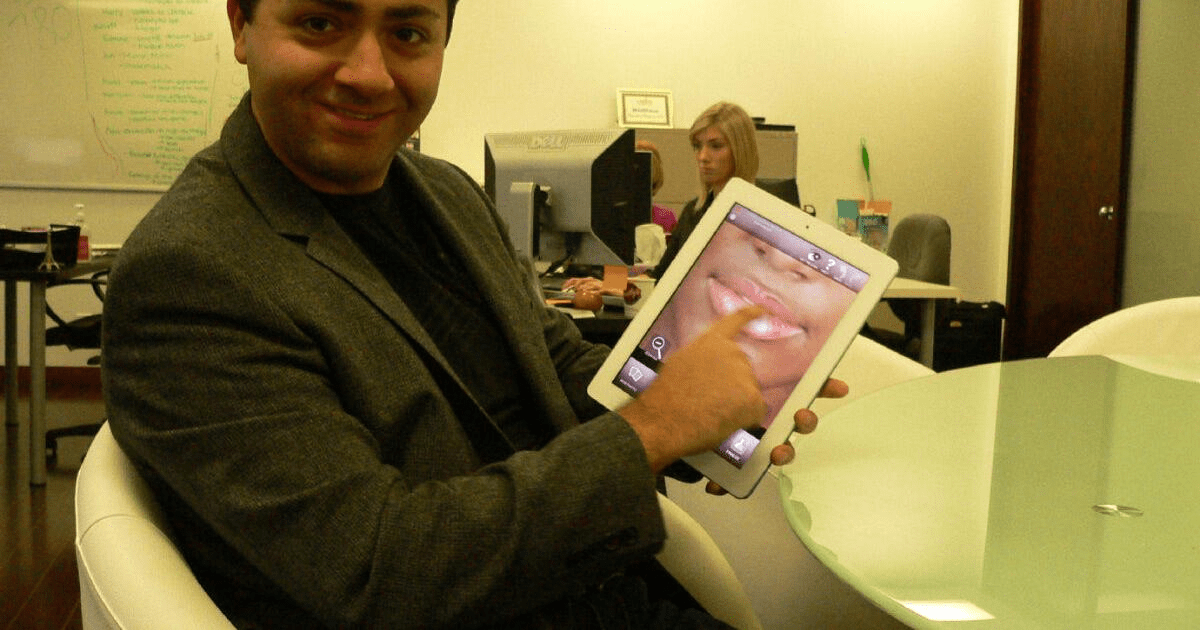
He holds numerous patents that highlight his innovative approach to image recognition and the creation of realistic virtual environments. But most importantly, he actively mentors young researchers who are just beginning their scientific careers. Parham believes that the future of technology depends on the ideas and energy of talented young people.
Ultimately, the secret to his success lies in the fusion of business and science. Aarabi isn’t afraid to experiment, turning his boldest ideas into practical solutions. He is changing how people interact with the virtual world by creating technologies that integrate seamlessly into daily life. Thanks to his work, the future—where digital tools harmoniously enhance our lives—is already here.