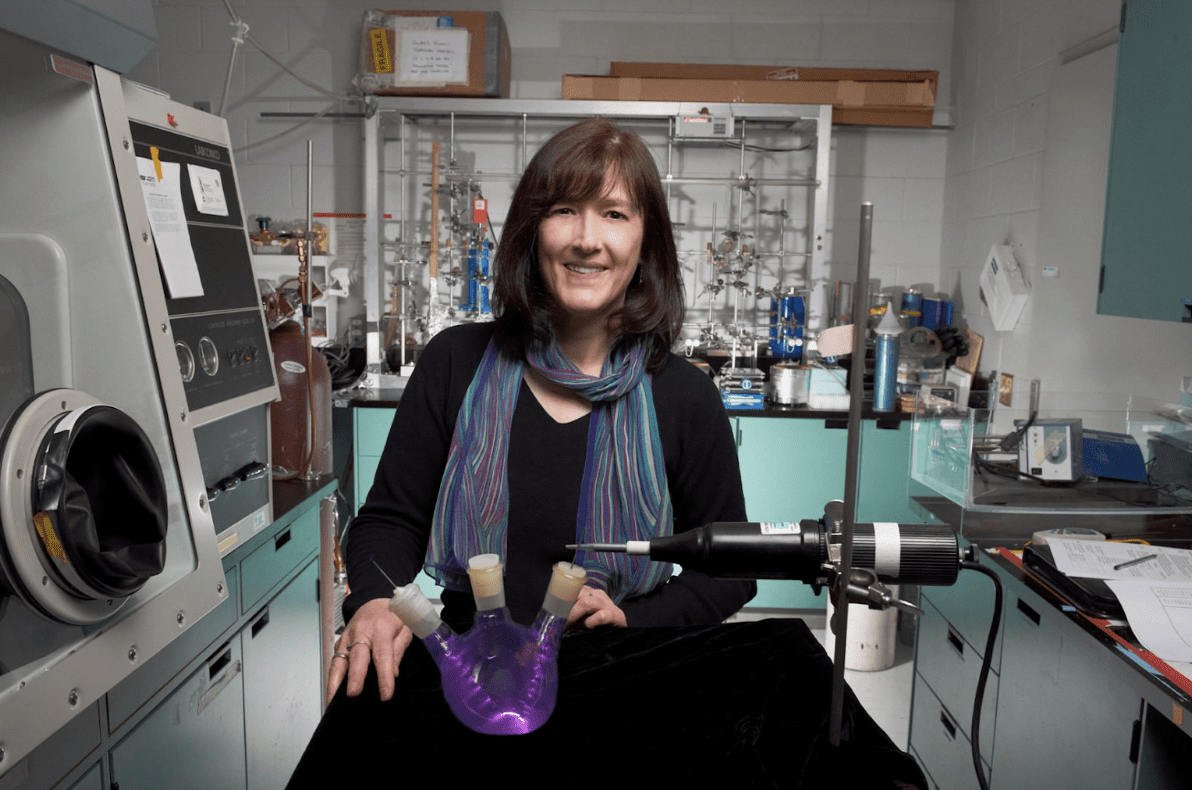

Imagine this: you’re going deep underground—not just a few meters, but kilometers. It’s dark, damp, and there’s not a soul in sight. Now, imagine that here, among ancient rock, water has been found that was sealed off from the world over two billion years ago. It has been untouched by any living creature, isolated since a time when trees didn’t exist on Earth and the sky looked completely different. This water was first discovered by Canadian geochemist Barbara Sherwood Lollar—a Toronto scientist who has turned the depths of the Earth’s crust into a new frontier for discovery. Read on at itoronto.
Her name rarely makes headlines, but her work has helped us understand that life can exist in the most unexpected conditions—deep beneath the surface, without sun or oxygen. Her discoveries have been a breakthrough not only in geology but also in biology, astronomy, and even in the study of Mars. In this article, we’ll explore how this Ontario woman made one of the most astounding discoveries in modern science, why she is respected by NASA, and why her name has become known not just in Canada, but far beyond its borders.
Barbara’s Childhood Surrounded by Nature
Barbara Sherwood Lollar was born in a small Canadian town where nature became her greatest fascination. Forests, rocks, rivers—it was all right there, just steps from her home. In such an environment, it was hard not to start asking questions: Why do stones shine? Where do rivers come from? What is hidden beneath the ground? Barbara was always searching for answers, and her family supported her curiosity about the world around her. Her parents didn’t brush her off when she brought home strange rocks or fell asleep with an encyclopedia in her hands. On the contrary, they encouraged her. At school, she wasn’t particularly outgoing or overly confident, but she had something more important: a natural curiosity and an ability to notice details that others simply walked past.
When it came time to choose a university, Barbara knew she wanted to study the natural sciences. She was fascinated by stories of how the planet was formed and was especially interested in what couldn’t be seen from the surface. Geology seemed like a logical yet mysterious field, allowing her to not only study the Earth but to delve into its depths, both literally and metaphorically. So, Barbara enrolled at the University of Ottawa and later continued her studies at the University of Waterloo. It was there that she took her first serious steps in science. She was drawn to isotope geochemistry—a complex but incredibly precise science that allows one to “read” Earth’s history through the chemical composition of its rocks and waters. This interest led her to pursue her PhD at the University of Toronto. It was here that she developed into a researcher who thinks outside the box and isn’t afraid to look for answers where others don’t even bother to look.
A Discovery That Changed Our Understanding of the Planet
Barbara’s professional career began in a mine. A deep, abandoned, almost forgotten one. In Northern Ontario, amid the rocks and forests, a scientific team led by Barbara Sherwood Lollar descended deeper and deeper. They weren’t looking for gold or minerals—they were looking for water. But not ordinary water from a river or an underground spring, but water that had possibly remained untouched for millions, or even billions, of years. It seemed like science fiction. After all, water moves, circulates, seeps through soil, and evaporates. For it to remain in one place for over two billion years sounded like it defied common sense. Barbara wasn’t chasing a sensation. She worked methodically: carefully selecting samples, calculating chemical compositions, and analyzing isotopes. Then, in 2013, her team descended into one of Canada’s deepest ore mines—Kidd Creek, near Timmins. It was there that they came across an underground water flow that had no connection to the surface.
They took samples. They analyzed them. And they realized this water had been “sitting” underground for a very long time. Its isotopic composition and the ratio of gases—especially helium, argon, and neon—allowed them to precisely date its isolation to over two billion years. It was so ancient that even science didn’t have a ready explanation for how it was possible. For geologists, it was a breakthrough. But the discovery had an even bigger impact on biologists and astrobiologists. If this water could remain untouched for so long, what else might be preserved within it? Perhaps life. And indeed, in a subsequent study of similar waters, they found microorganisms that don’t need oxygen and don’t depend on sunlight. They survive on chemical energy released from the rocks—and this revolutionized the idea of where life could exist at all.
So, Barbara Sherwood Lollar’s discovery isn’t just a story from the past, but a door to the future. After all, similar conditions might exist not only on Earth but also, for example, on Mars or the icy moons of Jupiter. This means the search for life beyond our planet isn’t so far-fetched after all.
Why Politicians and NASA Listen to Barbara
Barbara Sherwood Lollar is not just a scientist working in labs and mines; she is also a voice for science that is heard far beyond academic circles. Her research on deep groundwater has more than just scientific significance; it influences policy decisions and the strategies of major international organizations, including NASA. Politicians and government officials often turn to Barbara for her expert opinion, especially on issues of environmental protection and the sustainable use of natural resources. She serves on several scientific advisory boards for Canadian government bodies. Her recommendations help shape policies related to the conservation of water resources and the prevention of environmental disasters.
But most interestingly, her knowledge and experience are in demand far beyond Earth. NASA involves Barbara in its programs searching for life on other planets. Her discovery of ancient waters in Canadian mines has helped them understand that conditions favourable to life could exist deep beneath the surfaces of planets and moons in our solar system. Her ideas have become part of the strategy for searching for extraterrestrial life.
Furthermore, Barbara knows how to explain complex things in simple, accessible language. She often speaks at conferences, gives lectures, and participates in television programs to convey the importance of science to a broad audience. Thanks to her openness and ability to speak clearly, she is considered an authority and someone whose words are truly worth listening to. She also shows that scientific discoveries are not just about numbers and formulas, but about life, our planet, and the future of humanity.
Awards and Present Day
Barbara Sherwood Lollar is also a recipient of numerous awards, a mentor to young people, and simply a talented individual. Her scientific journey has long since moved beyond academia—and continues to inspire.
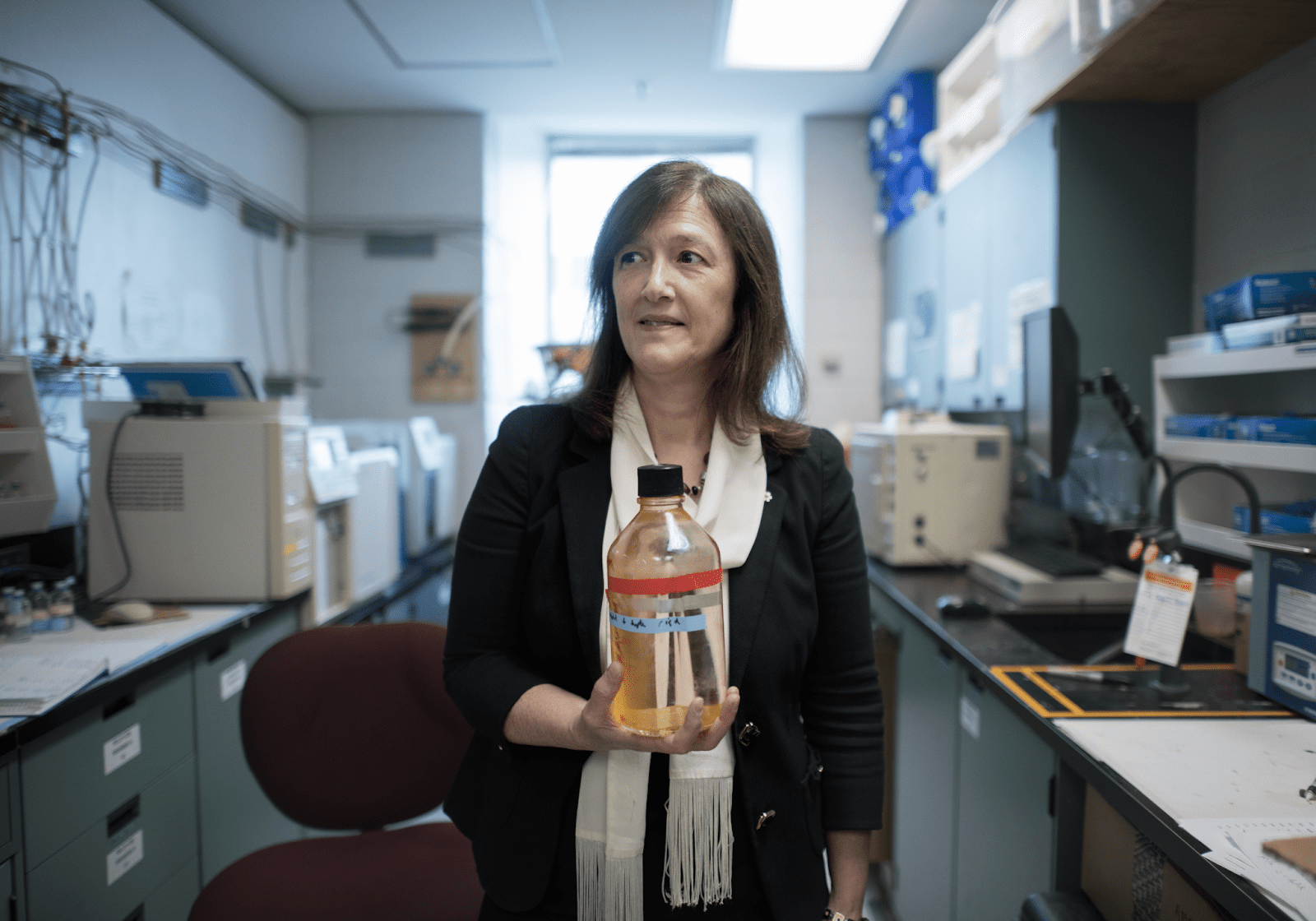
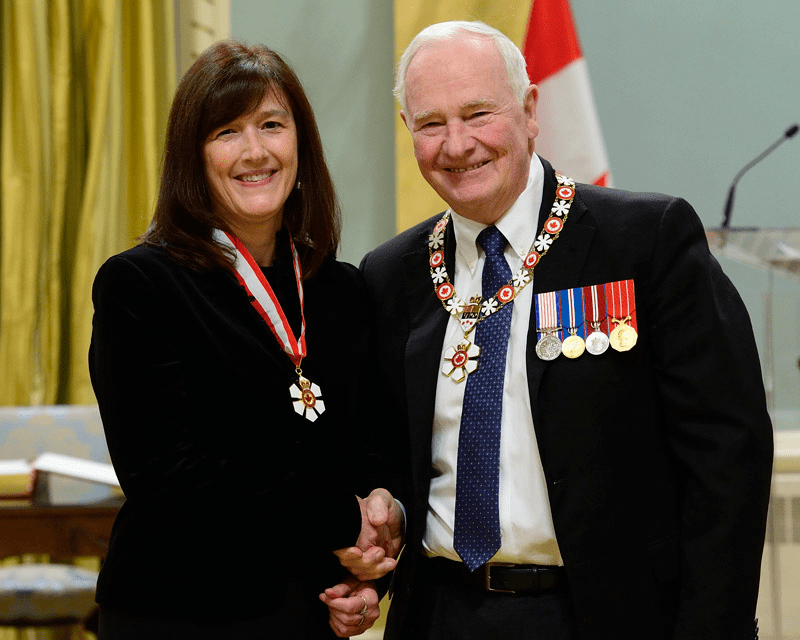
For her discoveries and contributions to water geochemistry, Sherwood Lollar has received Canada’s most prestigious honours, including the Order of Canada, one of the country’s highest civilian awards. In 2016, she won the NSERC Herzberg Gold Medal—Canada’s top prize in science and engineering, awarded for achievements that have fundamentally changed the field. She has also been repeatedly recognized as one of Canada’s most influential people by Maclean’s, which speaks volumes. Despite this status, Barbara hasn’t stepped away from teaching. She still works at the University of Toronto, where she teaches courses in geochemistry, advises students, and supervises research. And Barbara doesn’t just lecture from a textbook; she starts a conversation, sometimes with humour, sometimes seriously, but always with respect for young minds. The most important thing she tries to pass on is curiosity—a genuine, childlike curiosity about how the world works.
In conversations with her students, Barbara often repeats: “Science isn’t about perfect answers. It’s about good questions.” That’s why she supports research that goes off the beaten path and seeks new directions. In her lab, the atmosphere is one of exploration, not competition. It’s a place where it’s okay to make mistakes, but not okay to stop trying.