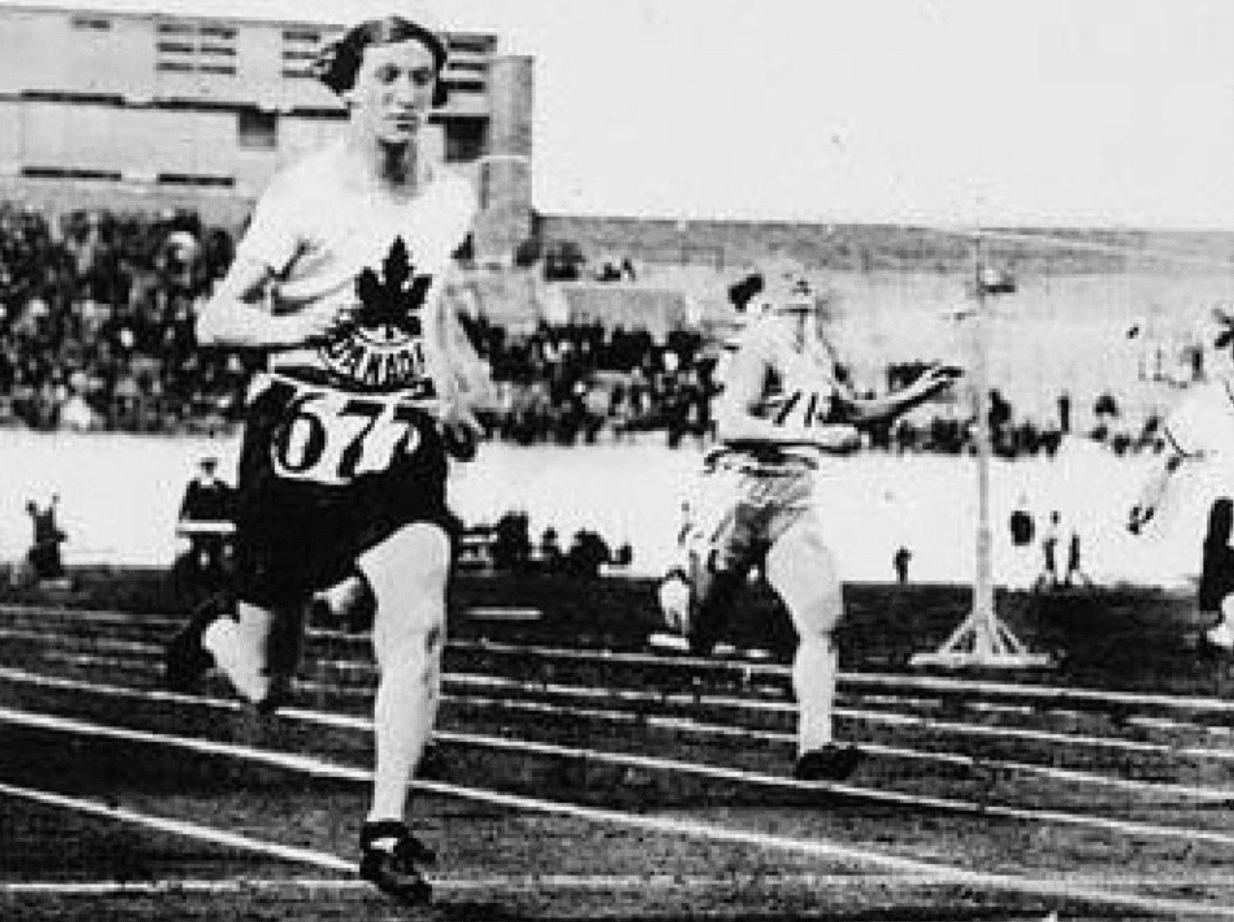

Before winning gold and silver medals at the 1928 Olympics, Bobbie Rosenfeld was already a star in Canadian athletics. Born in Yekaterinoslav (now Dnipro), Ukraine, in 1904, Rosenfeld immigrated to Canada as a child and grew up in Ontario before moving to Toronto. She earned the nickname “Bobbie” due to her bobbed haircut, though her given name was Fanny. From an early age, Rosenfeld enthusiastically played hockey, basketball, softball, tennis, and was an avid runner. Despite societal beliefs at the time that strenuous exercise was harmful to women, her family supported her athletic pursuits. More on itoronto.
The Advice That Made Her Famous
In 1923, Rosenfeld became globally recognized when a teammate suggested she compete in a 100-yard dash. At the time, she was working at a chocolate factory in Toronto. Not only did Rosenfeld win the race, but she also defeated Canada’s national champion, Rosa Grosse. Two years later, Rosenfeld and Grosse shared the world record for the 100-yard dash, completing it in 11 seconds. Later that year, she competed in a major race at the Canadian National Exhibition, once again beating Grosse and American world record-holder Helen Filkey. That evening, after her race, Rosenfeld helped her softball team qualify for the city championship.

Over the next decade, Rosenfeld became a symbol of Canadian women’s sports. She excelled in hockey, basketball, and softball while also making her mark in tennis by winning the Toronto Ladies Grass Courts tournament. Her versatility led one writer to summarize her career: “The shortest way to sum up Bobbie Rosenfeld’s career is to say that she was only bad at swimming.” A natural athlete, Rosenfeld’s prowess on and off the field always drew applause from spectators.
Bobbie as a Member of the “Matchless Six”
In 1928, Rosenfeld was selected for the “Matchless Six,” Canada’s women’s track and field team for the Amsterdam Olympics. These were the first Olympics to allow women to compete in track and field events. On July 31, 1928, Rosenfeld won a silver medal in the 100-metre dash, though many spectators believed she had finished first. Days later, she competed in the 800-metre race, entered primarily to support her teammate Jean Thompson. Despite not training for the event, Rosenfeld paced alongside Thompson for most of the race, ensuring her teammate finished fourth while she placed fifth. This act of camaraderie and sportsmanship showcased her selflessness, as Rosenfeld could have easily medaled herself.

Rosenfeld’s crowning achievement came on the final day of track events when she led Canada to a gold medal in the 4×100 metre relay. Upon the team’s return to Toronto, a celebratory parade drew 200,000 spectators. Her performance not only brought glory to Canada but also proved that women’s competitions were a valuable part of the Olympics. Delegates at the International Amateur Athletics Federation voted 16-6 to continue women’s track events at future Games. Ironically, Canada’s own delegate voted against women’s participation.
Despite her hero’s welcome, Rosenfeld returned to work at a chocolate factory to pay her bills, as there were no contracts or professional opportunities for women athletes in 1928. She continued playing hockey and softball but was forced to retire in 1933 due to severe arthritis. She then turned to coaching and, in 1937, began writing about sports.
Career in Sports Journalism
Following the 1928 Olympics, Rosenfeld remained active in sports until a severe bout of arthritis struck in 1929. She spent eight months bedridden and a year on crutches. By 1931, she returned to softball, and in 1932, she was recognized as Ontario’s top female hockey player. In May 1932, Rosenfeld began her journalism career with the Montreal Daily Herald, covering sports for four months.
In 1936, she joined the Globe and Mail sports department, where her column debuted in 1937. Originally titled “Feminine Sports Reel,” it evolved into “Sports Reel” and remained until 1957. Her column covered local, national, and international sports, advocating for women’s athletics and challenging criticisms of female athletes. Responding to claims that sports made women less feminine, Rosenfeld emphasized athletes’ personal stories, including their families, relationships, and achievements.

Known for her wit and humor, Rosenfeld defended women’s participation in sports. In a 1933 article for Chatelaine, titled Girls Play Sports for Goodness’ Sake, she countered a male sportswriter’s assertion that women could not meet male athletic standards.
Breaking Barriers and Legacy
Rosenfeld’s legacy is one of breaking barriers, first as an athlete and later as the only woman on the Globe and Mail sports staff. She declared in her column that “girls in sports are here to stay,” paving the way for future generations. Her contributions were recognized both during her life and posthumously. In 1950, a poll of sportswriters named her Canada’s Female Athlete of the Half-Century. In 1955, she was among the first inductees into Canada’s Sports Hall of Fame. She also appeared on a Canadian postage stamp, and the Bobbie Rosenfeld Trophy is awarded annually to Canada’s top female athlete.

At the 1928 Amsterdam Olympics, Rosenfeld called her performance “the greatest thrill” of her life. She scored more points for her country than any other athlete, male or female, winning a gold medal in the 4×100 metre relay, a silver in the 100-metre dash, and placing fifth in the 800-metre run.
Sources: