
People spend their leisure time in various ways, writes itoronto.info. The choice of activity often depends on one’s temperament. While some prefer quiet activities such as reading books, dining in cozy restaurants, or watching movies, others thrive on action and movement. For them, sports and games provide the perfect escape.
Bowling has enjoyed immense popularity for decades, but not everyone knows that the game we recognize today was not always played in this form. The development of the modern “five-pin” bowling game stemmed from the dissatisfaction of customers at a well-known Toronto establishment.
Based on information from bowlontario5pin.ca, here is the story of how five pins revolutionized bowling forever.
A Brief Historical Overview
For millennia, various forms of bowling have served as a source of entertainment and leisure. Archaeologists have uncovered bowling artifacts from Ancient Egypt, which suggests that even early civilizations enjoyed this pastime. Though their version of the game differed significantly from today’s, it laid the foundation for what would eventually become modern bowling.
Worldwide Fame Through Canadian Ingenuity
One ingenious Canadian, known for his remarkable creativity, transformed bowling forever. This individual, Thomas Ryan, is celebrated globally as the inventor of five-pin bowling.
Ryan later opened Toronto’s first-ever bowling centre in the heart of the city, a venue that quickly gained popularity. The centre featured ten lanes, palm trees, and even a live string orchestra to entertain players.
Unhappy Customers
Despite its initial success, many of Ryan’s customers were dissatisfied with one key aspect: the Tenpin game was considered too slow-paced, and the balls were far too heavy for many players.
According to Ryan, most of his clients were not physically strong. Many spent their leisure time playing bridge or engaging in other sedentary activities. Unsurprisingly, they struggled to lift and handle the heavy bowling balls.
The Five-Pin Innovation
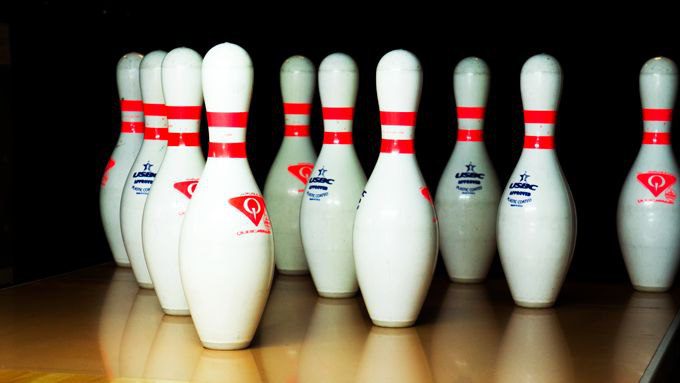
As the adage goes, “The customer is always right.” Ryan took his clients’ complaints seriously and enlisted his father’s help to carve smaller pins and create a hand-sized bowling ball. Meanwhile, Ryan devised a unique scoring system.
Thus, five-pin bowling was born in 1909, and it quickly became a sensation.
Rapid Growth
The new version of bowling experienced explosive growth. By 1910, the first league had been formed. The game spread rapidly across Canada, attracting an ever-increasing number of players.
By the 1950s, Toronto alone boasted around 120,000 bowlers. Over the following decades, five-pin bowling continued to evolve, leading to the formation of various associations. In 1963, a national youth bowling program was launched, which further boosted the sport’s popularity. Many players began transitioning from casual bowling to competing in organized tournaments.

Five-pin bowling quickly earned its place as one of the most beloved activities for people of all ages and professions. Today, Toronto proudly holds the title of the birthplace of one of the world’s most popular games.
Photo: wikipedia, partillearena.se