
Toronto has been the birthplace of many notable scientists who have made significant contributions across various fields. One such figure is David Auston, a physicist renowned for his groundbreaking work in terahertz technology, particularly the development of the Auston Switch. Learn more about his life and career on itoronto.info.
Searching for His Path
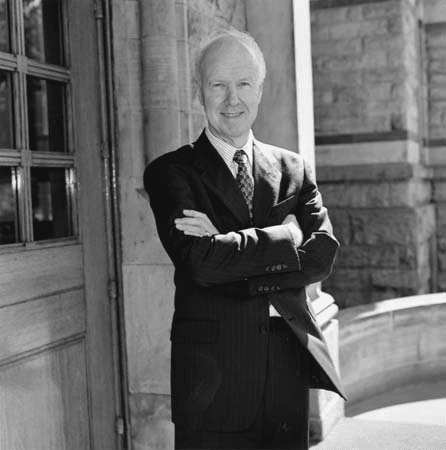
David Auston was born on November 14, 1940, in Toronto. He graduated from the University of Toronto in 1963 with a bachelor’s and master’s degree in engineering physics and electronics.
After completing his studies, Auston left Toronto and moved to California to work at General Motors’ defense lab. Before this move, he spent a year working at Canadair in Montreal, Canada.
One of the advantages of his role at Canadair was the opportunity to pursue graduate studies. Auston received both a fellowship and a position at the University of California, Berkeley, where he worked under the mentorship of Professor John Whinnery.
Whinnery had a profound influence on Auston, guiding his work on a dissertation that explored gas lasers.
Key Discoveries
Upon completing his dissertation, Auston joined a team of 120 PhDs at Bell Labs in Murray Hill, New Jersey, in 1966. There, he was provided with a laboratory, an assistant, and resources to “do something extraordinary.”
At Murray Hill, Auston collaborated with Dr. Alastair Glass on pioneering research into optical phenomena in electro-optic crystals. Using intense picosecond-duration pulses, they generated ultrashort electrical impulses by polarizing ion dopants in copper-doped lithium tantalate crystals.
This research led to the broader concept of using optical excitation to generate ultrafast electronic signals. Auston described it as a combination of optical sources and microwave transmission line techniques.
He later transitioned to using photoconductors instead of ion-doped crystals for generating electrical signals. Initial experiments with silicon-based transmission lines yielded fast electrical signals, but the slow carrier recombination in silicon limited bandwidth. To overcome this, Auston applied a second optical pulse to short-circuit the transmission line, creating a complete system for generating and detecting rapid electrical impulses. This approach became widely known as the Auston Switch.
Auston later expanded his research to include laser-annealed ion-implanted silicon.
While conducting groundbreaking research, Auston also continued his academic pursuits, earning a Ph.D. in Electrical Engineering from UC Berkeley in 1969.
In 1987, Auston joined Columbia University’s School of Electrical Engineering in New York. Collaborating with Xin-Cheng Zhang and several students, he focused on directly generating terahertz (THz) signals using various optically excitable semiconductor materials. These materials created current pulses perpendicular to the excitation direction, paving the way for efficient THz signal generation and transmission. This work established a new avenue for creating broadband THz pulses.
In 1990, Auston became the Dean of the Engineering School at Columbia University. Despite his administrative responsibilities, he remained deeply involved in research and student mentorship.
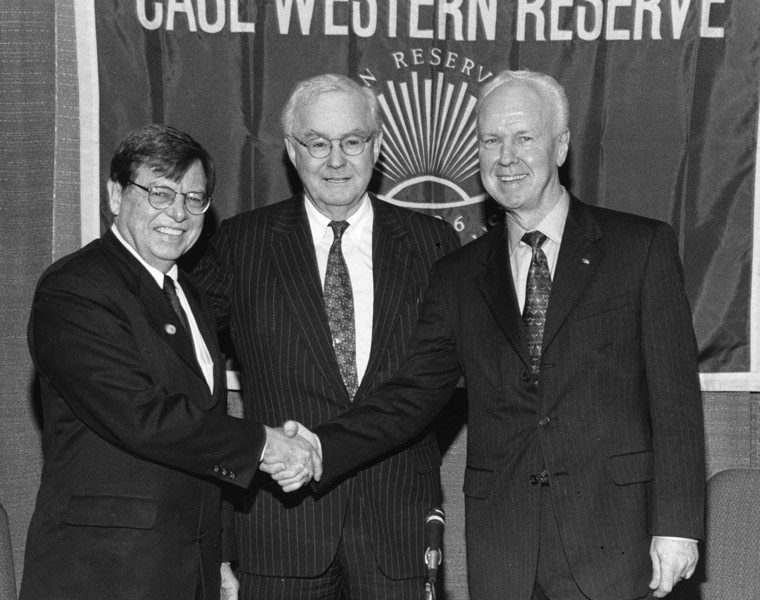
In 1999, Auston was appointed Director of Case Western Reserve University in Cleveland, Ohio. After two years, he retired from his academic career and relocated to Santa Fe, New Mexico, with his wife in 2001.
David Auston passed away on April 27, 2001, leaving behind a legacy of innovation and scientific discovery.