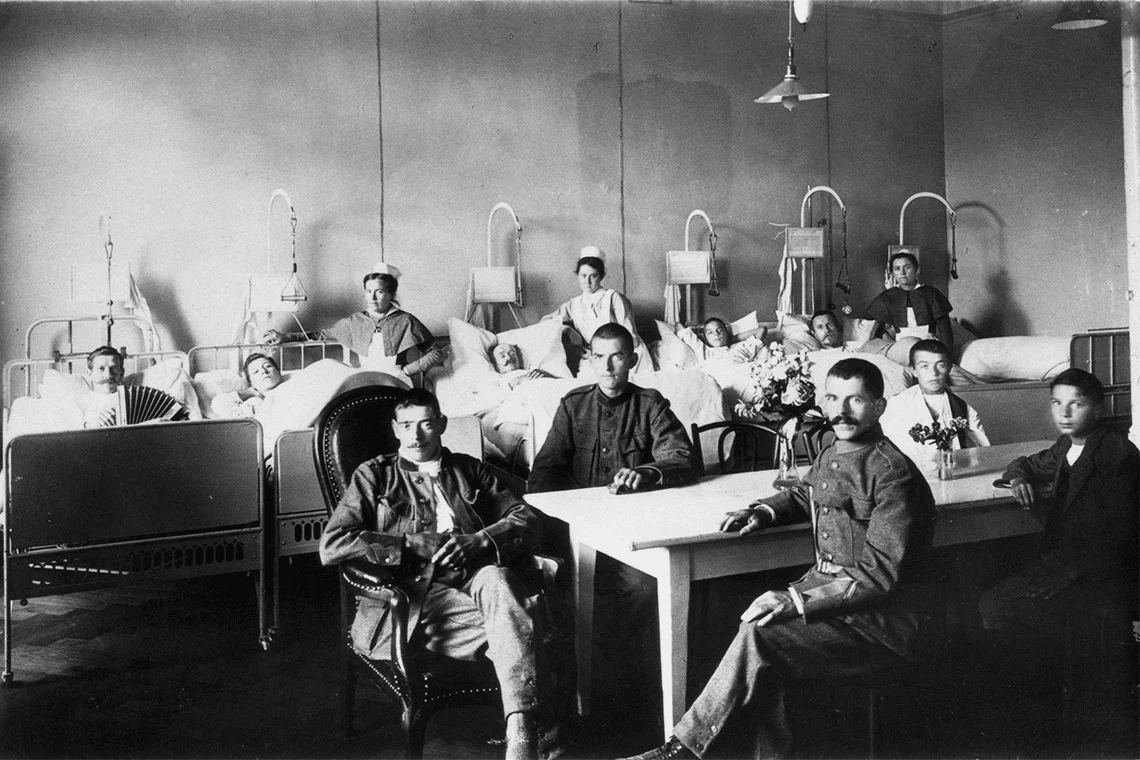

It began innocently enough, with sniffles and a cough. Then came the fever. Every muscle and joint ached. Nosebleeds started. Teeth fell out. Hair, too. The stench was indescribable. Vomiting and diarrhea were frequent, as were delirium and anxiety, driving some sufferers to suicide. Others screamed in terror, succumbing to dark nightmares. Breathing became difficult. Red blotches appeared on each cheek, and the skin turned a deep heliotrope hue—a grim term coined by doctors—as lungs filled with fluid. When fingertips blackened, the end came swiftly. People suffocated, drowning in their own bodily fluids. This was death by Spanish flu. Here is the story of the Spanish flu in Toronto. Read on at itoronto.
Victims of a Terrifying Pandemic
The pandemic that swept the globe from 1918 to 1919 claimed at least 50 million lives, making it the deadliest infection since the Black Death of the 14th century. Unlike most outbreaks, it disproportionately killed young, healthy adults. In Canada, over 50,000 people perished—roughly the same number of Canadians who died during the four years of World War I. The pandemic was likely the most significant mass-death event of the 20th century. Most fatalities occurred in the grim 13 weeks starting in September 1918, a tsunami of death that devastated families, communities, and nations.
Despite its staggering toll, the Spanish flu quickly faded from public memory. Unlike the Black Death, which inspired enduring artistic and cultural reflections, the flu became a forgotten plague. The first international pandemic conference, held in Cape Town 80 years later, attracted only 36 scholars.

Today, its magnitude is finally recognized, and the true extent of its impact is being uncovered. The Spanish flu has entered popular culture, featuring in Downton Abbey, Twilight Saga films, documentaries, books, and scientific studies. Memorial events and exhibitions now often commemorate its victims.
Lessons for COVID-19
Forensic investigations into the flu’s workings in Toronto have helped shape global pandemic preparedness, including efforts leading up to the 2019 COVID-19 outbreak. Provincial, national, and international readiness plans were activated. Seasonal flu viruses are under constant global surveillance, and leading minds, driven by philanthropist Bill Gates, are working toward a universal flu vaccine.
Despite these advances, the story of how the virus ravaged Toronto and other Canadian cities in 1918 is still being pieced together. Even a century later, its lessons are being analyzed. Why was it so devastating? What has changed since?

The spring of 1918 brought with it the usual seasonal flu that appeared everywhere. People were dying one by one, some turning especially purple-black and experiencing breathing difficulties. There was little alarm. In hindsight, this was the first of three waves. The world paid little attention, as the war consumed all focus. In Toronto, the military was the largest employer, controlling a significant portion of the country’s production and many hospitals. Across the globe, military personnel were on the move, traveling in vast numbers by land and sea, from Asia and North America to the trenches and battlefields of Europe.
News that could harm morale or benefit the enemy was censored in most countries to support the war effort. Communication tools were also limited. In Toronto, there were few telephones—no radio, no television. For this reason, the story of this flu is still being studied, but some details have already come to light.
The First Wave of Influenza in the City
In Toronto, disease outbreaks were not initially monitored. When the pandemic began, influenza was not a reportable illness. At the time, doctors rarely used the term “influenza,” instead referring to conditions like catarrh or purulent bronchitis. Many doctors and nurses were also absent from the city, serving in the war. Toronto did not even have a health department, and politicians who might have raised alarms did not convene during the worst of the outbreak. They only acted later, around February 1919, by which time the pandemic had nearly subsided.
On May 28, 1918, Toronto residents received their first hint of the devastation to come. This was reported through news from Spain, one of the few countries whose media was free from censorship since it was not involved in the war. The “grippe,” or influenza, had struck Madrid, and Toronto’s press reported that it had paralyzed the business world in Spain’s capital and afflicted approximately 30 percent of people in other parts of the country. According to the report, this was a “strange illness.”

One thing is certain: every influenza pandemic since 1918, as well as nearly all modern cases of seasonal influenza A worldwide, originated from that devastating mutation in 1918. Yet, no version has matched the pure, explosive virulence of the 1918 virus. No one knows exactly where the 1918 virus emerged—hypotheses range from the U.S. Midwest to China and a military camp in France—but it caused clinical illness in one-third of the world’s population, approximately half a billion people.
The Second and Third Waves of the Spanish Flu
At one point, historians believed that returning troops from the battlefields of Europe brought the virus home. However, detailed historical detective work by Humphries debunked this theory. In reality, returning troops were stranded in Europe from July to late September 1918 due to fears that their ships would be attacked by German U-boats. By the time soldiers began arriving home in October, the second wave of the pandemic had already spread in Toronto. When most soldiers returned following the armistice on November 11, the pandemic was already in full swing.
In fact, the second wave of the pandemic stealthily entered Toronto through Canada’s border with the United States on Friday the 13th, September 1918, establishing two deadly footholds in the city.

One of the main sources of infection was the troops of the Canadian Siberian Expeditionary Force (SEF), heading to Russia to support Allied efforts on the Eastern Front. By late September, just two weeks after the virus reached the city, SEF recruits left Camp Sussex in New Brunswick, traveling by train to Vancouver and then by sea to Russia. That same day, the flu broke out in the camp. By the time their train reached Montreal, some soldiers were so ill they had to be hospitalized. By mid-October, the pandemic was in full force, with thousands dying in the city. By December, the second wave subsided. A less severe third wave swept through Toronto in early 1919. Between the war and three waves of the Spanish flu, people were left numb. One survivor remarked to Pettigrew: “We didn’t even mourn.”
What Has Changed in Toronto Since Then?
Today, instead of face masks and goose grease, Toronto residents have antibiotics, flu vaccines, daily antiviral medications, and mechanical ventilators. A long-promised universal flu vaccine might be on the horizon in the next few years. Thanks to the pandemic, Torontonians now view health differently. Before 1918, health was seen as a personal and local responsibility. Now, it is considered a collective concern.
The pandemic also led to the development of public health infrastructure, hospital care systems, and comprehensive global pandemic planning. The Spanish flu became a global early warning system for the city. However, the legacy of this once-forgotten plague is still being assessed. The mortality caused by the war and the three waves of the pandemic wiped out entire generations of young Torontonians and others, creating a significant demographic “catastrophe.” This, of course, changed many things.