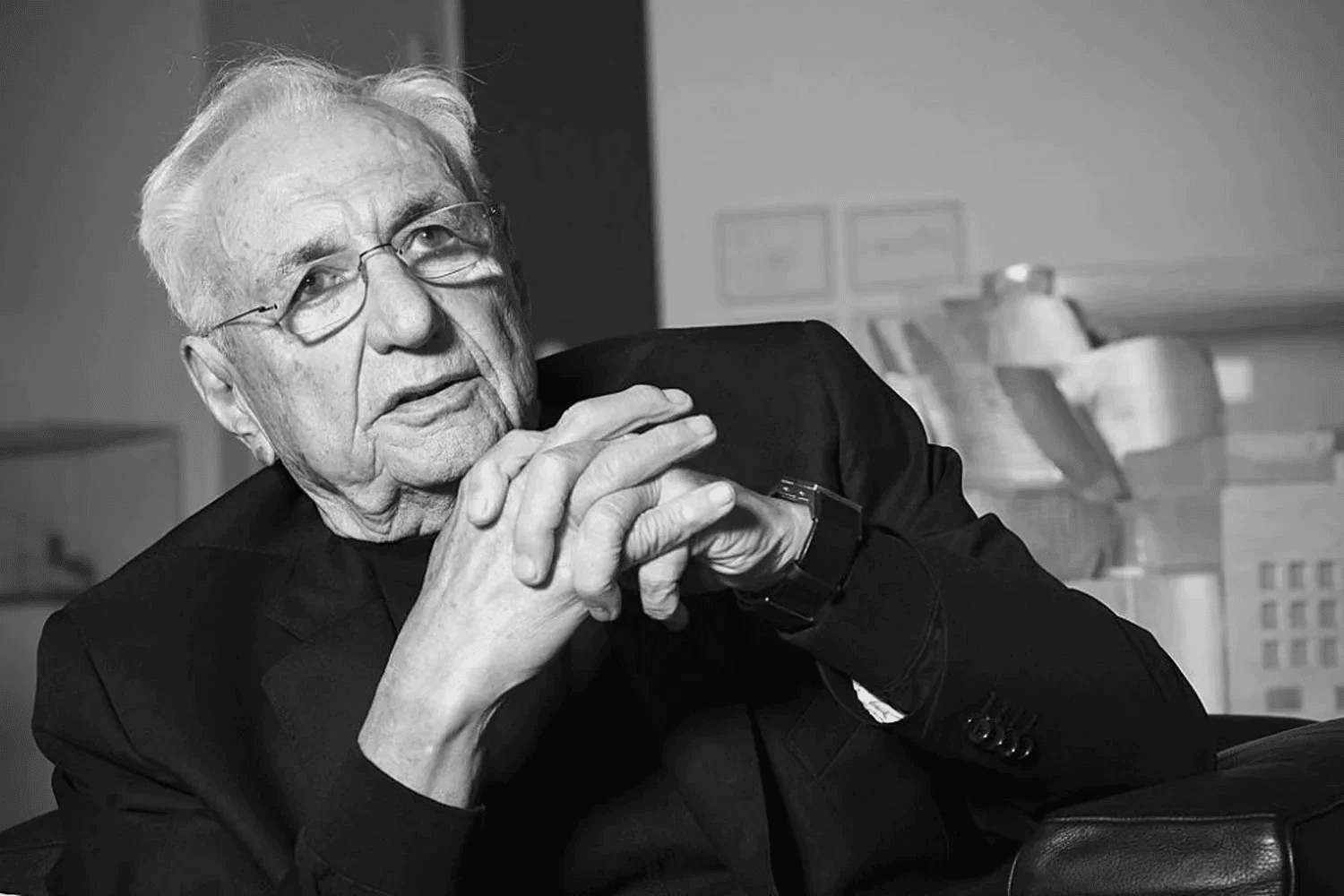

Frank Gehry’s name is often mentioned alongside leading architects of the 20th and 21st centuries, such as Herzog & de Meuron, Rem Koolhaas, and Tadao Ando. Based in Los Angeles, Gehry and his practice, Gehry Partners, have been trailblazers in architectural design through his expressive experiments with form and material. His work, celebrated for its intensity, allure, and unexpected character, earned him the prestigious Pritzker Architecture Prize in 1989. This recognition is one of many in his illustrious career, including a guest editorship for the October 2014 issue of Wallpaper. Even in his 90s, Gehry continues to design and mentor the next generation of architects. Read more on itoronto.
In a 2011 Wallpaper interview, Gehry reflected on his joy in teaching young partners at his firm, stating that watching their growth and success fills him with pride.
“Architecture Is Art”
American-Canadian architect Frank Gehry initially worked as a truck driver and chemical engineer before venturing into architecture. He was drawn to the field because of its close ties to art—a domain he was naturally inclined toward and explored extensively in his projects. His belief that “architecture is art” has been central to his professional philosophy from the outset. Gehry’s admiration for sculpture was particularly evident when he won the Pritzker Prize, citing artists as his key “idols.”
Gehry graduated from the University of Southern California and began working full-time at Victor Gruen Associates. After a year in the army, he enrolled in Harvard Graduate School of Design’s urban planning program. Gehry later worked for Pereira & Luckman and spent a year in France before returning to Los Angeles to establish his own firm in 1962.
Frank Gehry’s Work and Projects
From the beginning, Gehry’s work was characterized by raw, industrial materials and forms, often incorporating steel and titanium sheets. Chain-link fencing also frequently features in his projects. These materials and Gehry’s bold compositions make his designs instantly recognizable.
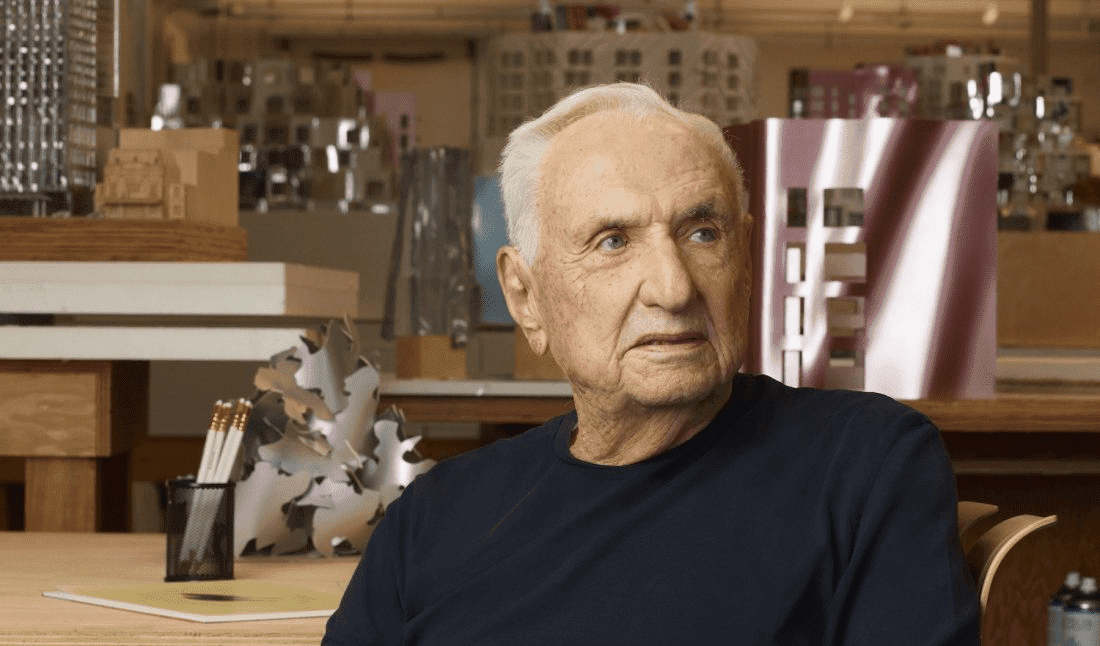
Though sometimes controversial, Gehry’s work is consistently awe-inspiring and has been described as iconoclastic, turbulent, and unpredictable. When awarding him the Pritzker Prize, the jury praised his restless spirit, which made his buildings unique reflections of contemporary society and its values.
Gehry’s career spans projects of all types and sizes, from office buildings to pavilions and single-family homes to skyscrapers. He has also ventured into smaller-scale designs, crafting sculptural furniture, including a collection for Knoll, jewelry for Tiffany & Co., and limited-edition creations like Hennessy cognac bottles in 2020 and sculptural handbags for Louis Vuitton.
One of Gehry’s most famous works, the Guggenheim Museum in Bilbao (1997), exemplifies the “Bilbao Effect.” This project transformed a modest Spanish town into a global cultural hub, showcasing the power of contemporary architecture to reshape cities.
When asked about the impact of the Bilbao project, Gehry noted that it brought trust in his designs and proved how modern architecture could serve communities while remaining cost-effective.
Architectural Significance and Community Identity
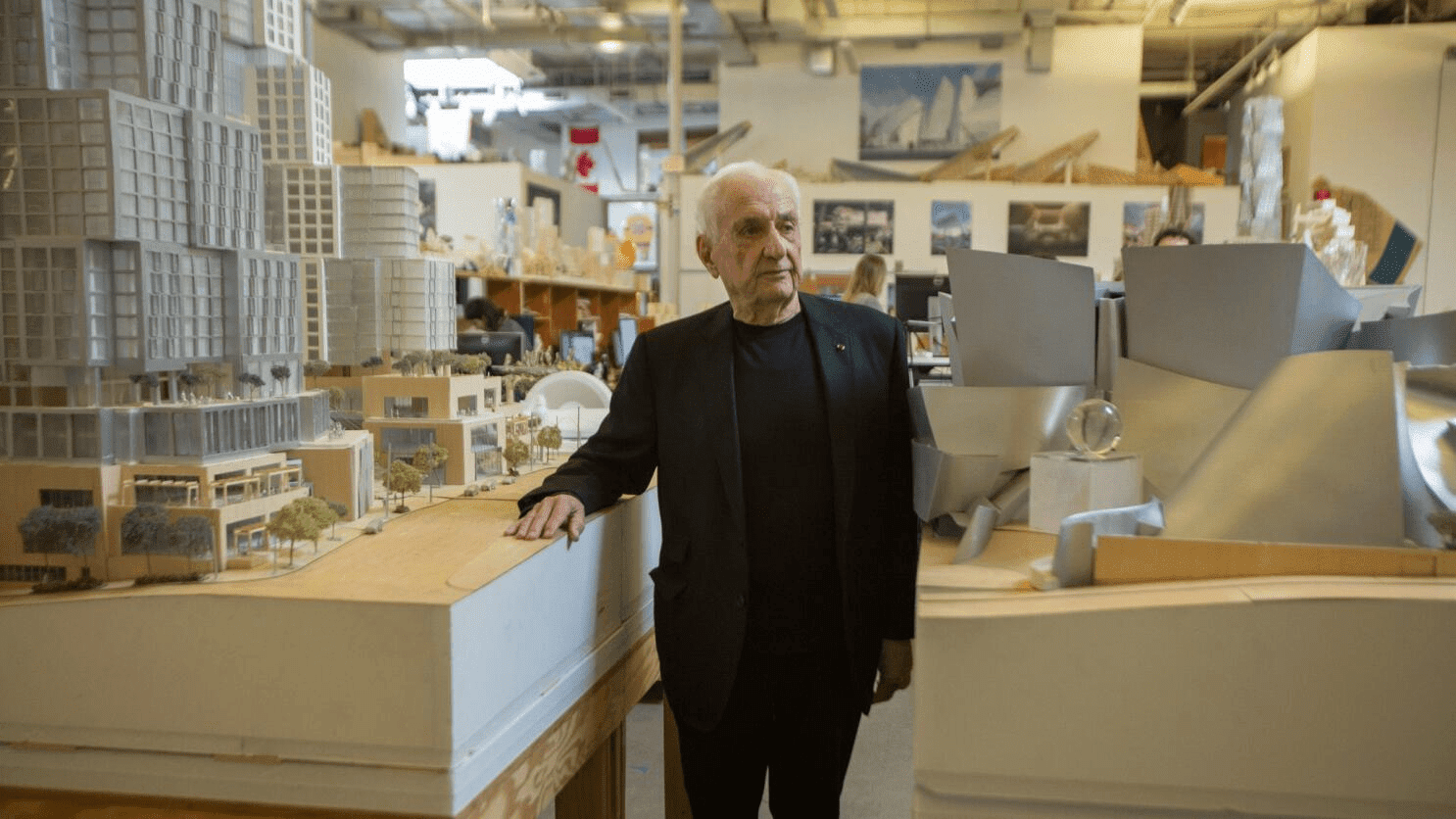
Although many consider Gehry one of the original “starchitects” of the 20th century, he is skeptical about the term “iconic architecture.” In the same interview, he noted that history has shown that public buildings need to be emblematic, as they become a source of pride for communities. From the Greeks and Romans to the present day, public structures have consistently been seen as having architectural significance. This accumulation of such buildings acts as symbols, identifying and representing communities. According to Gehry, much of what happens in the world today continues to be driven by this notion of iconicity.
Gehry also observed that there are early steps toward a new architectural language or paradigm for urban development. However, he remarked that there is a negative reaction to these changes, reflecting a retreat to the 1960s—a movement he believes feels misplaced and outdated. Nonetheless, contemporary artists are stepping up to the challenge, aiming to infuse cities with character and beauty. Many, like Olafur Eliasson and Anish Kapoor, are involved in ambitious large-scale projects, leveraging their access to resources, contacts, and technical capabilities to create monumental works, akin to landmarks such as the Eiffel Tower. Gehry regards these efforts as inspiring and vital for the future of urban spaces.

Notable Works of Architect Frank Gehry
- Frank Gehry House, Santa Monica, USA. Originally built in the 1920s, Frank Gehry’s family home was redesigned and expanded by the architect in 1977. It features a metallic exterior enveloping the original structure, transforming the historic building with a rough, utilitarian shell that reflects Gehry’s passion for dynamic volumes and intense geometry.
- Nationale-Nederlanden Building, Prague, Czech Republic (1996). Known as the Dancing House or Ginger and Fred, this iconic building in Prague was completed a year before Gehry’s landmark Guggenheim Museum in Bilbao. Co-designed with Croatian-Czech architect Vlado Milunić, its dynamic contours evoke the image of a couple dancing, complete with a swirling skirt and top hat.
- Guggenheim Museum, Bilbao, Spain (1997). Completed in 1997, this project transformed the port town of Bilbao into a cosmopolitan city with a world-class art museum that continues to draw crowds. The museum is a symbol of the “Bilbao Effect,” showcasing the power of contemporary architecture to reshape the identity and fortunes of a city. Gehry often highlights the transformation as a turning point in his career.
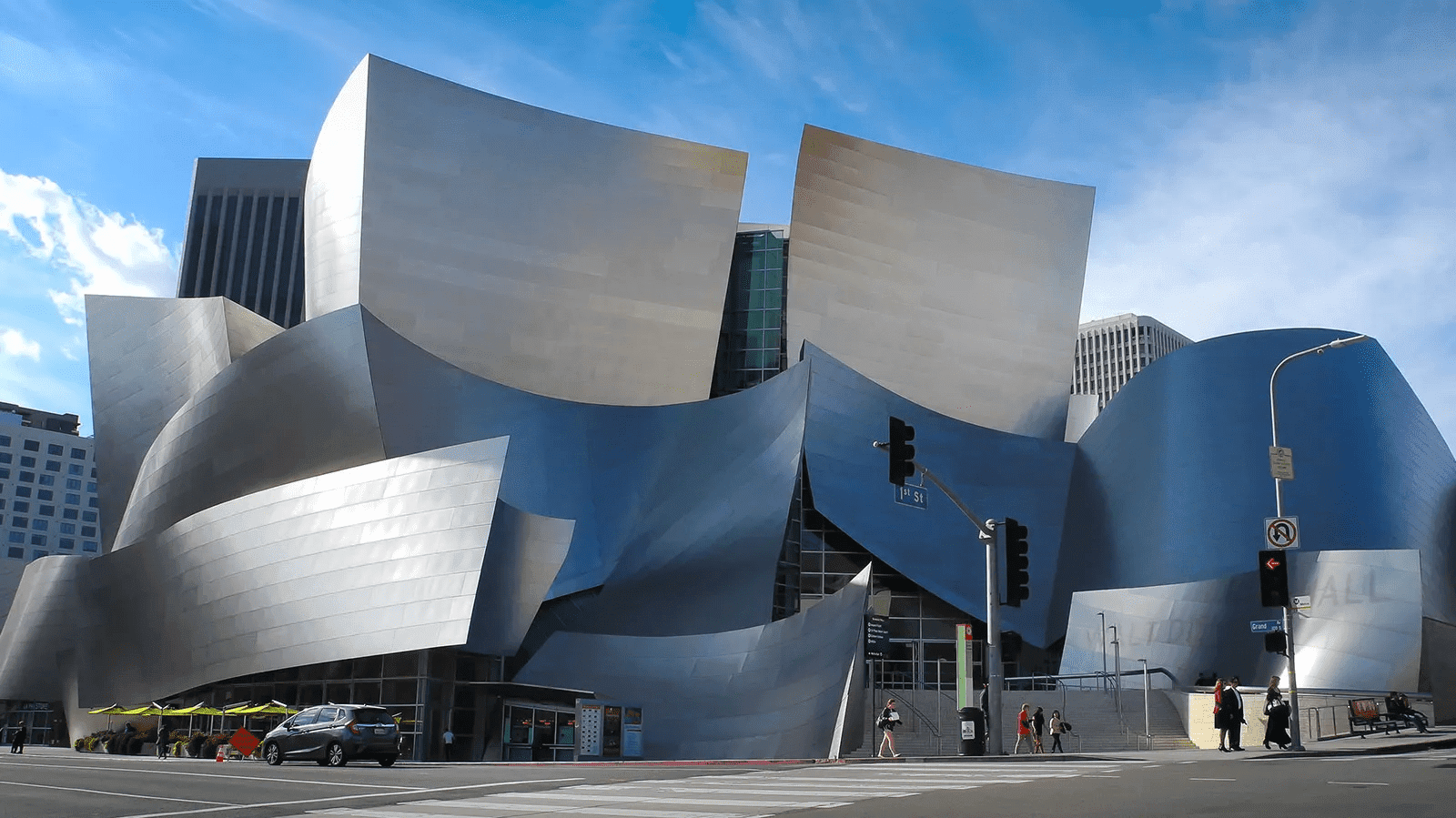
- Walt Disney Concert Hall, Los Angeles, USA (2003). Following the success of the Guggenheim Bilbao, Gehry designed the Walt Disney Concert Hall, now a landmark of downtown Los Angeles. Located at 111 South Grand Avenue, this project was commissioned shortly before Gehry received the Pritzker Prize in 1989. The concert hall represents his first major architectural achievement in his hometown.
- Serpentine Pavilion, London, UK (2008). Gehry’s contribution to the Serpentine Galleries’ renowned pavilion series was the ninth in the collection. Built primarily from wood with assistance from engineers at Arup, the design featured suspended glass canopies to shield the interior from wind and rain while providing shade on sunny days. The amphitheater-like structure was designed for live events, music, performances, and discussions.
- 8 Spruce Street, New York, USA (2011). Previously known as the Beekman Tower and later New York by Gehry, this skyscraper became a recognizable feature of the Manhattan skyline. When it opened in 2011, it was the tallest residential building in the Western Hemisphere. The mixed-use tower combines residential, commercial, educational, and healthcare spaces, showcasing Gehry’s versatility and attention to urban functionality.
Sources