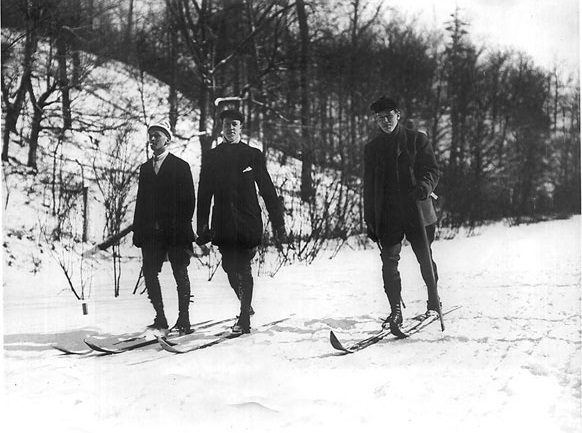

It might seem like the Don River Valley in Toronto belongs on a different continent, given its snowy landscape even during mild winters. Each year, after the first snowfall, residents can be seen skiing down the hill slopes. The Don Valley and its expansive terrain have long been ideal for various sports, including curling, ice skating, and sledding. In the early 20th century, this area hosted skiing competitions that attracted champions from around the globe. More details on itoronto.info.
Early Skiers in Toronto
Since 1920, the Toronto Ski Club held annual gatherings in the Don Valley. They developed an intricate network of trails and built several challenging ski jumps that drew both locals and professional athletes from around the world. Eventually, a ski resort featuring an electric lift was established near Lawrence Avenue.
According to the earliest records of the Toronto Ski Club’s official history, the city’s first skier was a man who, in the 1800s, carved tracks through High Park on 10-foot-long wooden skis with a bamboo pole.
The first skier’s appearance was memorable: he wore a hat, carried a backpack, and donned wool socks. However, the retrospective does not mention his name.
Early skiers often traveled alone or in small groups through High Park, using long hickory boards for skiing. By 1920, the Toronto Ski Club had started organizing regular meetups in High Park and the Rosedale Ravine. Local newspapers, such as The Toronto Star, described these events as civil and orderly gatherings.
The city’s occasional lack of snow didn’t deter the club members. Papers like The Globe and The Toronto Star frequently published photos of enthusiastic men and women enjoying skiing in the Don Valley.
Activities of the Toronto Ski Club

The Toronto Ski Club gained popularity from its inception. In 1926, its members established an annual Valentine’s Day festival featuring skiing and sledding. The festival’s events included skijoring—a cross-country skiing race where competitors are pulled by horses or dogs—and bobsled races.
Constantly seeking new skiing terrain, the club negotiated agreements with several golf course owners, allowing members to use the fairways during snow-heavy weeks. In milder winters, uneven snow coverage forced skiers to explore alternative locations.
The Growth of Skiing in Toronto
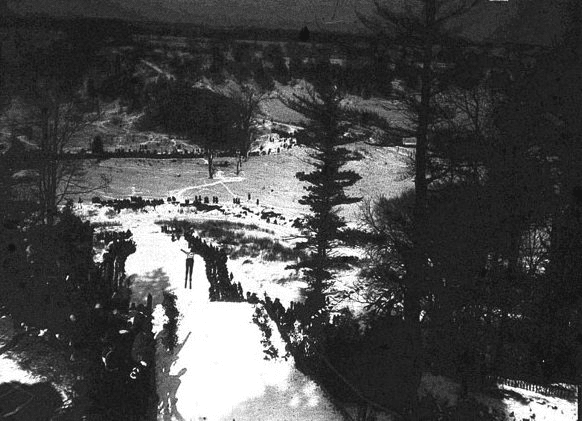
In 1934, the club announced plans to build a massive 30-meter ski jump on the edge of the Don Valley in Thorncliffe. Olympic skiers from across Canada used the jump, which was iced with materials transported from Maple Leaf Gardens. The area at the base of the slope was cleared to accommodate 10,000 spectators.
That same year, the competition’s winner was Teddy Zinkin, a Toronto native who jumped an impressive 34 meters from the ramp’s base.
Amateur enthusiasts and other sports groups utilized the lower Don Valley slopes for winter sports. Charles Sauriol, in his book Tales of the Don, recalled how effortlessly people skied down the slopes. He also noted that the valley featured two tracks: one for training and another for competitions.
Due to inconsistent snowfall, the Toronto Ski Club eventually relocated to Forks of the Credit and later to Huntsville. However, skiing activities persisted in the Don Valley.
Later, Milne Hollow, near Lawrence Avenue and the Don Valley Parkway, opened the privately owned Don Valley Ski Centre. It featured three ski lifts, with lift passes priced between $3 and $5.
A network of several 200-meter-long trails extended from the hilltop at Railside Drive to the flat valley floor. Skiers could navigate a series of ramps during their descent. However, the ski centre ceased operations in 1977.
Toronto’s skiing history is a testament to the city’s innovative use of natural terrain for sports. Despite challenges like inconsistent snowfall, skiing continues to be a cherished winter tradition for many Torontonians.