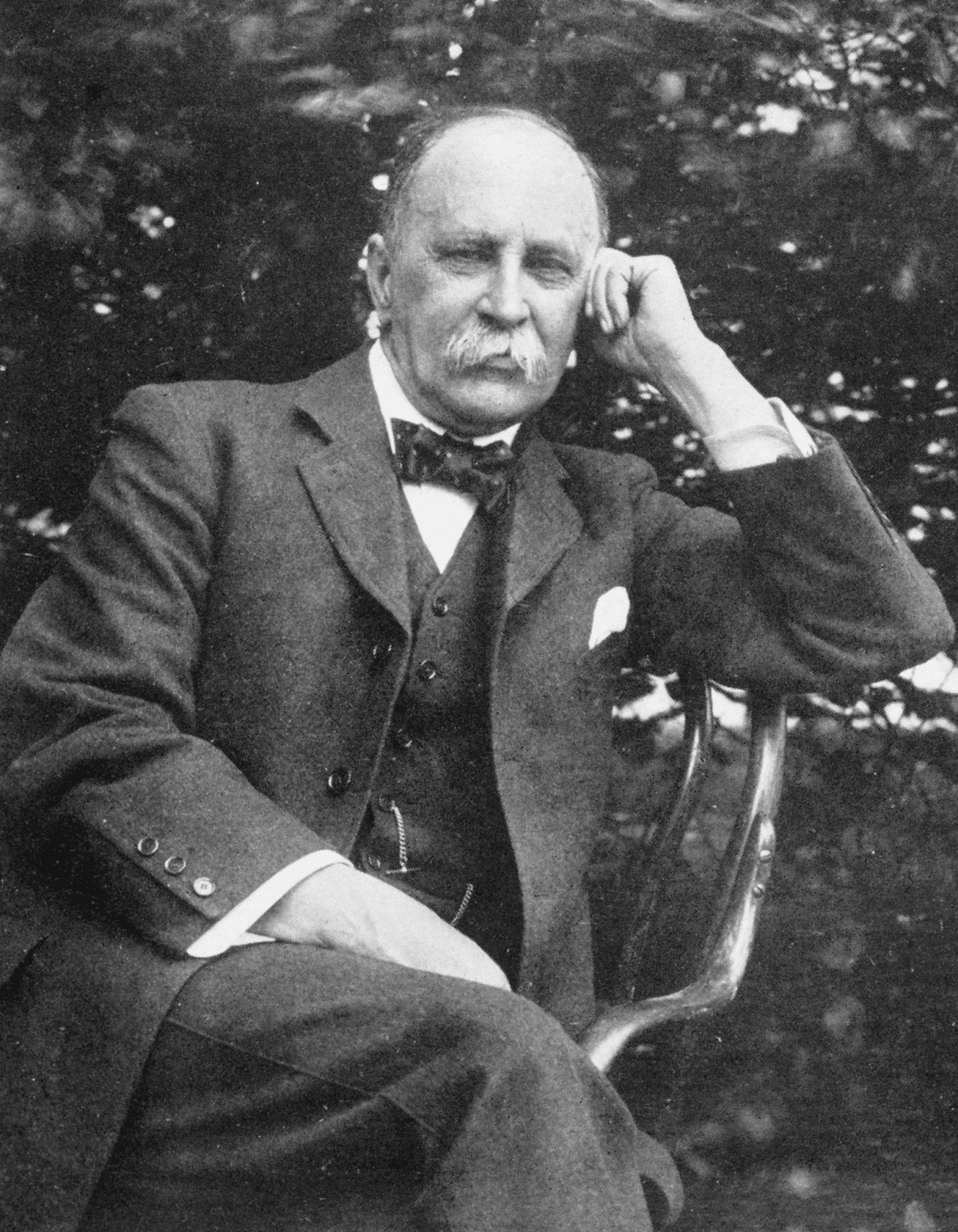

Few individuals have made as significant an impact on modern medicine as Sir William Osler. His contributions to the understanding of pathology and pathophysiology, as well as to the systems in which medicine is taught, remain unparalleled. Known for his charisma, integrity, and tireless work ethic, Osler’s achievements continue to inspire admiration more than 80 years after his passing. Read more on itoronto.info.
Early Life and Fascination with Microscopic Worlds
Osler was the eighth of nine children born to Reverend Featherstone Lake Osler, an Anglican clergyman, and Ellen Free Picton. Born on July 12, 1849, in Bond Head, Ontario, young William displayed a mischievous personality and quick wit. However, his behavior often frustrated his teachers. His parents’ firm moral and religious guidance ultimately shaped him, and in 1864, he enrolled at Trinity College School in Port Hope, Ontario, with plans to follow in his father’s footsteps as a clergyman.
While at Trinity College, Osler met Reverend W.A. Johnson, a professor and local physician, Dr. James Bovell. These two men profoundly influenced Osler’s career. They often spent weekends exploring their shared interest in natural sciences and microscopy. Young Osler joined their expeditions into the Canadian countryside, collecting samples for microscopic study. Inspired by Rudolph Virchow’s groundbreaking work on cells, Osler became captivated by the microscopic world and its insights into life and disease—a fascination that would define his career.

Osler’s newfound passion for biology led him to abandon his plans to become a clergyman. His early experiences with microscopy instilled in him a dedication to observation, documentation, and teaching—principles he carried throughout his life. At just 20 years old, while studying medicine, Osler published his first article, “Christmas and the Microscope”, in 1869.
Medical Education and European Training
In 1868, Osler graduated from Trinity College, and in 1872, he earned his medical degree from McGill University in Montreal, where he developed a keen interest in pathology. Recognized for his skills in dissection and microscopy, Osler became a key figure in establishing North America as a hub for medical study.
After graduating, Osler traveled to Europe to further his medical training, attending lectures and working with leading physicians in London, Berlin, and Vienna. His studies in London focused on human blood research, and in 1873, he presented a groundbreaking report to the Royal Microscopical Society, becoming a member shortly thereafter. That same year, he identified platelets as a normal component of circulating blood.

Return to Canada as a Pathologist
In 1874, at just 25 years old, Osler returned to Canada and was appointed Lecturer in Physiology, Histology, and Pathology at McGill University. Over the next decade, he worked as a pathologist at the Montreal General Hospital, where he conducted over 1,000 autopsies, meticulously documenting his findings. His research on the correlations between pathology and patient diseases gained recognition in medical journals across North America and Europe.

He personally conducted over a thousand autopsies while in Montreal, meticulously recording his observations on the pathological correlations with patients’ diseases. William Osler even published his findings in numerous journals. These studies reflect his comprehensive knowledge of what his contemporaries in medical journals across the United States and Europe were writing about. Additionally, they demonstrate his gratitude and dedication to his medical students and fellow physicians, who undoubtedly contributed to Osler’s broad reputation as an outstanding clinician and professor.
In 1884, he accepted a position as the Chair of Clinical Medicine at the University of Pennsylvania. There, he prepared numerous articles detailing intriguing patient cases, his work in foundational sciences, and his insights into the pathology and pathogenesis of diseases.
The Johns Hopkins Legacy and “The Principles and Practice of Medicine”
Medical education in the United States faced significant challenges in the late 19th century. Most schools offered short programs with little affiliation with universities. This changed dramatically thanks to Johns Hopkins, a Baltimore merchant who bequeathed $7 million to establish a university and hospital with the highest medical standards.

The state of medical education and medicine itself in the United States underwent a transformative change due to the will of a Baltimore merchant, Johns Hopkins. Upon his death in 1873, Johns Hopkins bequeathed $7,000,000, to be equally divided between the university and hospital that would bear his name. According to his will, the hospital was to be affiliated with the university, and the medical school established was intended to rival the great institutions of Europe.
William Osler was invited to serve as the chief physician of the institution and its school, tasked with designing the unique Johns Hopkins medical curriculum. It is fair to say that Osler’s arrival in Baltimore marked a turning point in the trend of medical education in the United States and a revitalization of American medicine as a whole.
Upon accepting the position at Johns Hopkins University and relocating to Baltimore, Osler devoted himself to patient care, medical research, and the organization of medical societies. However, perhaps his most significant achievement was his authorship. His seminal work, The Principles and Practice of Medicine, was published in 1892. This textbook, its subsequent editions, and Osler’s contributions to the Johns Hopkins Medical School elevated his public reputation to heights previously unheard of for a practicing physician.
Incidentally, after completing the first edition of his textbook, Osler married Grace Revere Gross, a widow and direct descendant of Paul Revere. The couple later had two sons, one of whom died as an infant. The other, Edward Revere Osler, was fatally wounded during World War I.